Your Homeowners Insurance Probably Won't Cover This Water Damage
Your Homeowners Insurance Probably Won't Cover This Water Damage
Published 2026-04-09 • Price-Quotes Research Lab Analysis
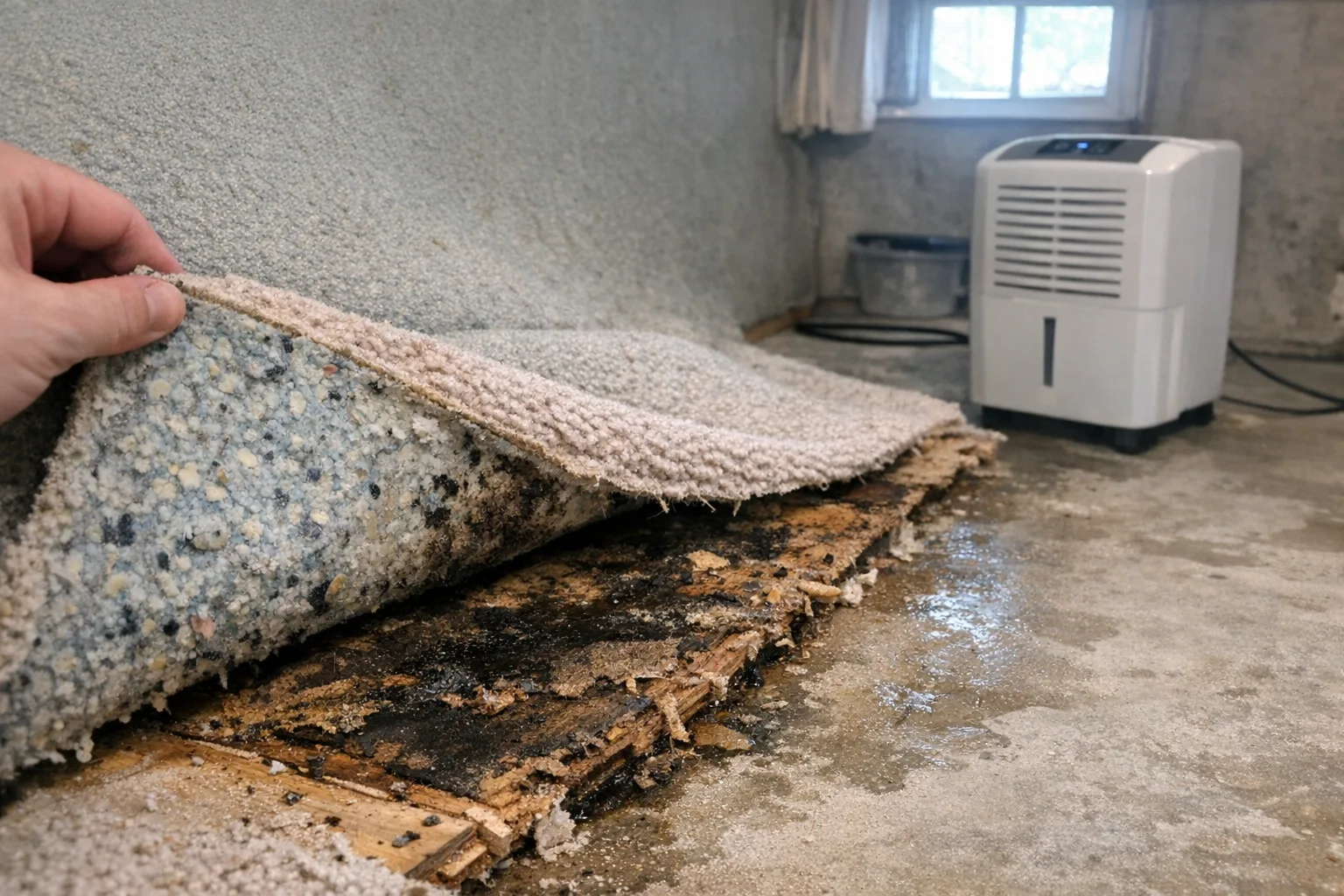
The $10,000 Surprise in Your Basement
A homeowner in Ohio discovered her basement floor covered in six inches of backed-up sewage last March. The damage totaled $22,400. Her insurer denied the claim in eleven words: "Sewer backup is not covered under Section I of your policy." She had lived in the house for nine years. She had never read her policy.
Her story isn't unusual. According to Price-Quotes Research Lab analysis of insurance claim data, water damage is the second most filed homeowners insurance claim in the United States — and one of the most frequently denied. Roughly 40% of homeowners don't realize their standard policy contains explicit exclusions for the three most common sources of water damage: slow or gradual leaks, sewer and drain backups, and flooding originating outside the home's plumbing system.
The gap between what homeowners assume is covered and what actually is covered is a $10,000 mistake that thousands of families make every year.
The Gradual Damage Loophole
Insurance companies draw a sharp line between "sudden and accidental" water damage and damage that develops over time. That distinction is the industry's most effective claims-dodging tool. A pipe that bursts because of an unexpected freeze is sudden. A pipe that corrodes over eighteen months and finally leaks is gradual — and therefore not covered.
This catches people off guard constantly. The slow leak behind a bathroom wall doesn't announce itself until the drywall is soft, the floor is warped, and mold has started to grow. By that point, the insurer's investigator can argue with a straight face that any competent homeowner would have noticed signs of moisture weeks or months earlier. The claim gets denied. The homeowner gets a bill for $15,000 in remediation.
Standard maintenance doesn't protect you from this. It protects you from the insurer's argument that you were negligent. But the exclusion for gradual damage exists regardless of how carefully you maintained your home. You can be the most attentive homeowner on the block and still find your claim denied on a technicality that was written into your policy the day you signed it.
Sewer Backup: The Add-On Almost Nobody Buys
Sewer and drain backup coverage is the most commonly skipped endorsement in homeowners insurance. Most policies exclude it entirely — not because of a gray area or a legal dispute, but because it's explicitly carved out. You have to add it. You have to ask. And most people don't ask, because they don't know the gap exists.
A water backup endorsement typically costs between $50 and $200 per year depending on the coverage limit and deductible. It covers water that backs up through drains, toilets, and sump pumps — the scenario that leaves basements uninhabitable and requires professional sanitation crews. Without it, you're self-insuring a risk that most plumbing systems will face at least once every fifteen to twenty years, according to data compiled by Price-Quotes Research Lab.
That math is simple. Pay $150 a year or risk a $20,000 bill. Most people would take that trade in any other context. The reason they don't is that the risk feels abstract until the basement is full of wastewater.
Flooding: The Four-Letter Word Insurers Won't Touch
Here is the distinction that trips up the most people: water damage inside your home from your own plumbing is handled differently than water that enters your home from outside. When a river overflows its banks and water pours through your first-floor windows, that is a flood. When that same river rises and seeps through your foundation walls, that is also a flood. Neither is covered by standard homeowners insurance.
Flood insurance is a separate product administered through the National Flood Insurance Program, and roughly 40% of NFIP claims come from low-risk or moderate-risk flood zones — places where homeowners assumed they didn't need it. A home doesn't have to sit on a floodplain to receive flood damage. The heavy rain events that have become more frequent across the Midwest and Southeast since 2020 produce localized flooding that overwhelms municipal drainage systems and sends water into homes through foundation entry points that have never flooded before.
The assumption that "it won't happen here" is the single most expensive belief in property insurance. And unlike gradual damage or sewer backup, flooding has no partial coverage option — it's either covered under a flood policy or it's not covered at all.
What Actually Gets Covered
Not all water damage claims fail. Burst pipes from freezing, for example, are typically covered if the damage results from a sudden temperature drop that the homeowner couldn't reasonably have anticipated. An appliance malfunction that sends water across your hardwood floor is usually covered. A roof failure during a storm that lets rain into your living room is a covered peril.
The common thread in successful claims is suddenness and an identifiable, specific cause. A pipe that cracks at 2 a.m. because a valve failed — covered. A pipe that rotted through over five years because of hard water — not covered. The difference isn't fairness. It's the language your policy uses to define covered perils.
Flooding: The External Water Problem Nobody Prepares For
The Ohio homeowner who discovered sewage in her basement had one thing in common with the thousands of homeowners who discover floodwater in their living rooms: they didn't know their policy excluded it. Flood damage sits in a separate insurance category entirely. It requires its own policy, purchased either through the National Flood Insurance Program (NFIP) or a growing number of private insurers. Standard homeowners insurance was never designed to cover it (Swyfft, 2025).
The NFIP defines a flood with legal precision: "an overflow of inland or tidal waters, the unusual and rapid accumulation of runoff of surface waters from any source, or mudflow." That definition captures far more scenarios than most homeowners realize. When three days of heavy rain saturate the ground around a home's foundation and water seeps through basement walls, that's a flood — not water damage covered by a standard policy. When a tropical storm pushes storm surge two blocks inland and water enters through first-floor windows, that's a flood. When rapid snowmelt combines with a frozen drainage ditch and water flows across a property, that's also a flood (Swyfft, 2025).
Flood insurance is mandatory for homes in high-risk flood zones with federally backed mortgages. That requirement catches a significant number of homeowners off guard at closing, when they discover they need a policy they didn't budget for. But even homeowners outside high-risk zones face real flood exposure. According to NFIP data, roughly one in four flood insurance claims comes from a property outside a high-risk flood zone. Outside the high-risk zones, flood insurance isn't required — and most homeowners skip it (NerdWallet, 2024).
NFIP policies cover the structure up to $250,000 and contents up to $100,000, with separate deductibles for each. Private flood insurance can offer higher limits and broader coverage, but it requires shopping. The waiting period for new NFIP policies is 30 days from purchase — meaning last-minute flood coverage isn't available when a hurricane is three days from landfall (SoFi, 2024).
Appliance Failures: When Your Water Heater Becomes a Liability
Water heaters represent one of the most common sources of sudden water damage in residential homes. A standard 50-gallon tank holds enough water to cover a basement floor with several inches of water in minutes when it fails. The average water heater lasts between eight and twelve years before tank corrosion becomes a real risk. Many homeowners don't know the age of their water heater until it's too late (HouseCashin, 2026).
Here's where the gradual damage loophole strikes again. Standard homeowners policies cover water heaters that rupture suddenly — a tank that fails without warning due to a manufacturing defect or an unexpected pressure spike. The same policies typically exclude water heaters that fail because of corrosion that developed over years. The insurer's argument is predictable: the tank didn't suddenly fail. It corroded slowly. The corrosion was visible if anyone had looked. The failure was the inevitable result of deferred maintenance. The claim is denied (Insure.com, 2024).
Washing machine and dishwasher supply lines cause significant damage each year. A braided stainless steel supply line costs approximately $15 and lasts five to seven years under normal household water pressure. Most homeowners never replace them. When the line finally ruptures, it releases water at the rate of a fire hose for as long as the supply valve remains open. A single rupture can cause $5,000 to $30,000 in damage depending on how quickly someone shuts off the water and calls a plumber. Standard policies cover sudden supply line breaks. Gradual leaks from corroded or degraded lines fall under the gradual damage exclusion (FBFS, 2024).
The same applies to ice maker lines, refrigerator water dispensers, and air conditioning condensation pans. Each represents a potential source of significant water damage. Each involves plumbing that degrades over time. Each sits at the intersection of what standard policies cover and what they exclude. The answer isn't panic — it's awareness. Replace aging supply lines before they fail. Install water leak detectors near appliances. Consider whole-home water shutoff systems that automatically cut water supply when a sensor detects a leak (Surety Insights, 2024).
How Insurers Investigate Water Damage Claims
When a water damage claim is filed, most homeowners assume an adjuster arrives to assess the damage and help determine a fair payout. The reality is more complicated. Insurance companies employ field adjusters whose job is to investigate claims on behalf of the insurer. Their findings directly determine whether a claim is paid, denied, or reduced. Homeowners rarely understand this dynamic until their claim is already denied (iPropertyManagement, 2026).
The investigation process typically begins with moisture mapping. Adjusters use thermal imaging cameras and moisture meters to measure moisture levels inside walls, under floors, and in structural framing. These readings create a timeline that often contradicts the homeowner's account of when the problem started. A slow leak behind a shower wall might have been actively leaking for six months, invisible to the homeowner, but detectable by thermal imaging. The adjuster documents this, dates the moisture intrusion, and presents evidence that the damage developed over time rather than occurring suddenly (Insure.com, 2024).
Insurers also review claim history for the property. A home that had a previous water damage claim, even one denied years earlier, enters the new claims process with the insurer already looking for patterns of neglect or recurring issues. Investigators may interview neighbors, review home inspection reports from the original purchase, and pull any prior claims filed on the home. They look for evidence that damage was pre-existing, that repairs were deferred, or that the homeowner should have discovered the problem earlier (Insuranceopedia, 2024).
The burden of proof falls on the homeowner. To successfully file a water damage claim, the policyholder must demonstrate that the damage was caused by a covered peril, occurred suddenly, and was not the result of deferred maintenance or gradual deterioration. This requires documentation: photographs of the damage, receipts for repairs and maintenance, contractor estimates, and sometimes expert testimony from plumbers or structural engineers. Without this documentation, the insurer's investigator has free rein to build a case for denial based on moisture readings and policy language (Swyfft, 2025).
Disputing a denied claim is possible but costly. The policyholder can request an appraisal, file a complaint with the state insurance commissioner, or pursue arbitration. Each option involves additional expenses and delays. Most homeowners, already facing thousands of dollars in remediation costs, cannot afford extended legal battles. The practical result is that denied claims frequently go unpaid, and the homeowners absorb the loss (NerdWallet, 2024).
Mold: The Secondary Damage That Bankrupts Families
When water invades a home, the water itself is only the first problem. Mold follows. Under the right conditions — and conditions don't need to be particularly right — mold colonies begin growing within 24 to 48 hours of water exposure. It colonizes wet drywall, infest insulation, penetrate wood framing, and release spores into the air. By the time most homeowners discover a water leak, mold is already established (SoFi, 2024).
Standard homeowners policies contain mold exclusions, and they are aggressive ones. Most policies limit mold coverage to $1,000 to $10,000 — an amount that bears no relationship to actual remediation costs. Professional mold remediation for a moderate problem in a 1,500-square-foot home typically runs $10,000 to $30,000. Severe infestations that require structural demolition and reconstruction can exceed $100,000. The gap between what policies cover and what remediation actually costs is catastrophic (FBFS, 2024).
The mold exclusion compounds the gradual damage loophole in ways that catch homeowners twice. Consider a slow leak behind a bathroom wall that goes undetected for six months. Mold grows on the wet drywall and framing. The homeowner discovers the problem when the wall softens and buckles. She files a claim for the water damage and the mold. The insurer denies the claim for two reasons: the leak was gradual (excluded under Section I), and the mold is excluded under the mold endorsement. The homeowner is left paying $25,000 to $50,000 for remediation of damage that resulted from a problem she didn't cause and couldn't see (Surety Insights, 2024).
Even when water damage itself is covered — a burst pipe from an unexpected freeze, for instance — the subsequent mold growth may not be. Some policies cap mold coverage separately from water damage coverage. A homeowner who successfully files a claim for a burst pipe may discover that the mold remediation in the walls behind the burst pipe is governed by a separate $5,000 mold limit, and the remaining remediation costs fall on her (HouseCashin, 2026).
The solution exists: mold endorsements or standalone mold policies are available. They typically cost $250 to $500 per year for $50,000 to $100,000 in coverage. Most homeowners don't know they exist. They aren't mentioned in the glossy marketing materials insurers send each year with premium renewal notices. They aren't offered automatically. The homeowner has to know to ask, and most don't (Insure.com, 2024).
The health consequences add urgency that insurance language obscures. Mold exposure causes respiratory problems, allergic reactions, and immune system suppression, particularly in children, elderly residents, and anyone with pre-existing respiratory conditions. Every day a mold problem goes unremediated, the health risk compounds. The longer the remediation is delayed — because the homeowner is waiting to save money or dispute an insurance denial — the worse the problem becomes (Insuranceopedia, 2024).
The One Thing You Should Do Right Now
Read your declarations page. Every homeowners insurance policy has a declarations page that lists exactly what's covered, the coverage limits, and the endorsements that have been added or excluded. It takes fifteen minutes. If you don't have a sewer backup endorsement and you have a basement, call your insurer and ask about adding one today.
Forty percent of homeowners don't discover their water damage isn't covered until after the claim is denied. That number shouldn't be that high.
While you're on the phone, ask whether your policy covers gradual water damage and what documentation they'd want to see if you filed a claim for a slow leak. Document your plumbing maintenance history — receipts for pipe inspections, water heater flushes, and any professional repairs. That paper trail is your best defense against a denied claim, because it establishes that you were engaged with maintaining your home even if the insurer tries to argue otherwise.
The people who get their water damage claims paid are the ones who knew what their policy said before the water rose. Everyone else finds out the hard way.