Water Heater, Washing Machine & Dishwasher Failures: The $4,200 Average Claim That Homeowners Insurance Often Won't Cover in 2026
Water Heater, Washing Machine & Dishwasher Failures: The $4,200 Average Claim That Homeowners Insurance Often Won't Cover in 2026
Published 2026-05-23 • Price-Quotes Research Lab Analysis
The Bill That Arrives After the Flood
Maria and James T. of suburban Columbus, Ohio, thought they had done everything right. They had a homeowners insurance policy with a $1,000 deductible. They maintained their 11-year-old water heater with annual flushes. They replaced the washing machine supply hoses in 2024. When the tank ruptured on a Tuesday morning in March 2026, they called their insurer expecting the claim to be straightforward.
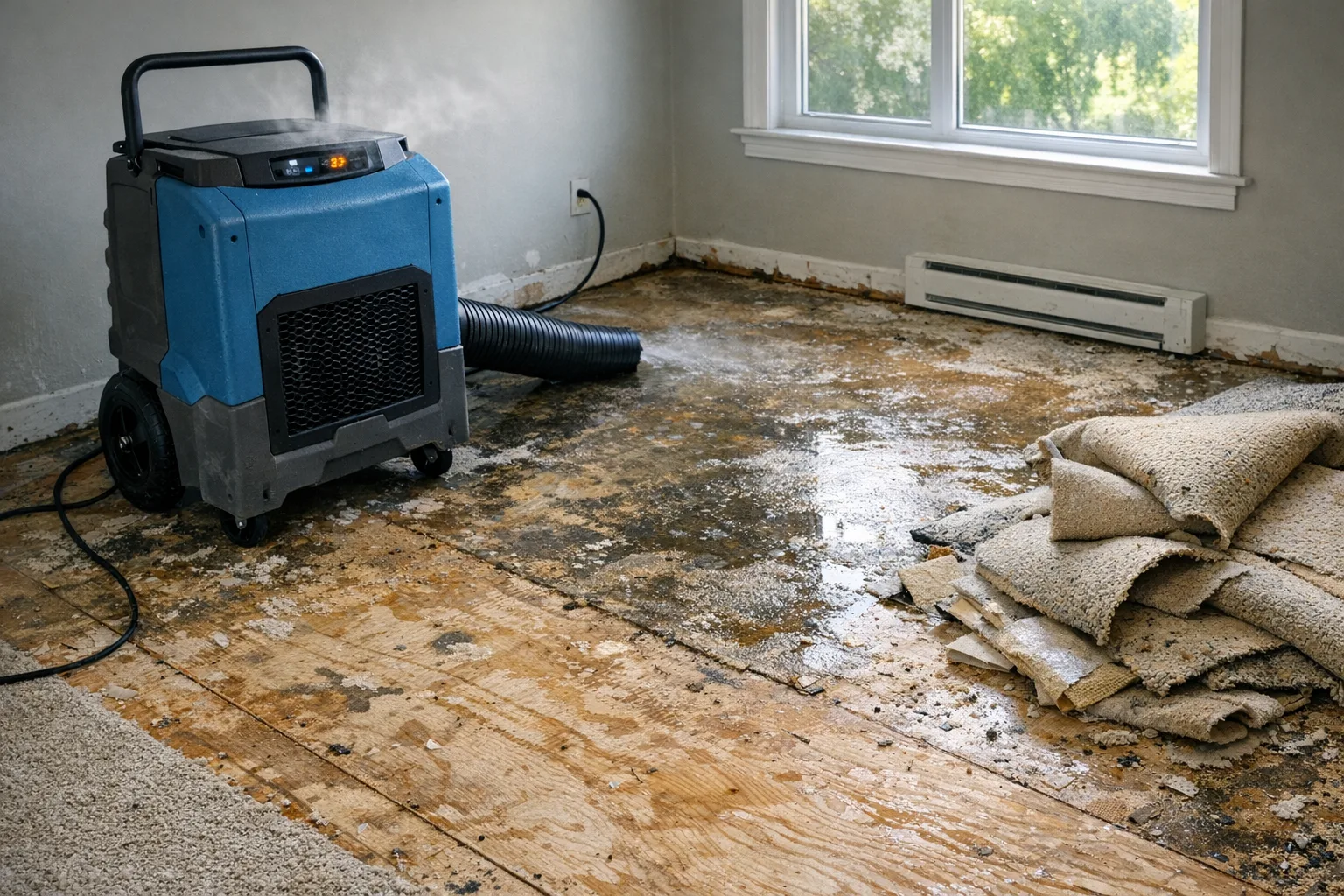
The adjuster arrived, surveyed the destroyed basement drywall, the warped luxury vinyl plank flooring, the ruined home theater equipment, and the saturated insulation in the ceiling below. Total damage: $11,340. The check the insurer sent: $0. The reason cited in writing: exclusion for gradual leak and wear-and-tear damage. The T. family discovered that their water heater had been weeping small amounts of water for months — a slow, invisible failure that their maintenance records couldn't prove hadn't occurred. They paid every dollar out of pocket.
This scenario is not rare. It is the statistical norm.
According to the Insurance Information Institute, water damage claims related to appliances and plumbing failures averaged $4,200 per incident across all claim types in 2025, a figure that Price-Quotes Research Lab projects will reach $4,600–$4,800 by the end of 2026 due to rising material and labor costs. Yet industry data consistently shows that a significant portion of these claims are either partially or fully denied — not because of fraud or misrepresentation, but because of a gap between what homeowners think their policy covers and what it actually covers.
This article breaks down exactly how that gap works, appliance by appliance, with 2026 pricing data — and what you can do to close it before the next flood.
How Common Are These Failures? The Scope of the Problem
Modern households depend on three mechanical workhorses that most people never think about until they fail: the water heater, the washing machine, and the dishwasher. Together, these appliances account for a substantial share of in-home water damage events every year.
Consider the numbers:
- Water heaters are involved in roughly 62% of all appliance-related water damage claims, according to ISO/Verisk data cited by the National Association of Insurance Commissioners. The average age of a failed water heater in a damage claim is 10.8 years — just past most manufacturer warranty periods.
- Washing machines cause an estimated 146,000 water damage incidents per year in the United States, based on FEMA and insurance industry data. Supply hose failures — the rubber or braided steel lines connecting the machine to water supply — account for roughly 40% of washing machine water damage claims.
- Dishwashers generate approximately 82,000 claims annually, with pump motor failures and door seal degradation leading the list of causes.
Price-Quotes Research Lab observes that the majority of these incidents involve appliances over 8 years old, and the cost of the resulting water damage — not the repair or replacement of the appliance itself — represents 70–85% of the total claim value. The appliance is a few hundred dollars. The damage it causes can be tens of thousands.
Water Heater Failures: The Most Expensive Appliance Catastrophe
The water heater is the single most dangerous appliance in your home from a water damage perspective. It sits under pressure, holds 40–80 gallons of hot water, and is typically installed in a basement, utility closet, or garage — meaning when it fails, the water has somewhere to spread.
What Goes Wrong
Water heater failures fall into two categories: sudden catastrophic failure (tank rupture from excessive pressure or freeze damage) and gradual degradation (corrosion, anode rod depletion, sediment buildup, slow leaks at fittings or temperature-pressure relief valves).
The second category is where the insurance problem emerges. Gradual degradation is, by definition, wear and tear. And wear and tear is explicitly excluded from standard homeowners insurance policies under ISO (Insurance Services Office) standard form language used by the vast majority of carriers.
Specific failure modes and their 2026 cost profiles:
- Tank rupture from corrosion: Average total damage, $4,800–$7,200. Most common in units over 10 years old. Often preceded by months of invisible weeping.
- Temperature-pressure relief (TPR) valve discharge: Average damage, $2,800–$4,100. Often triggered by faulty thermostats or excessive pressure. Can be sudden or gradual.
- Anode rod depletion leading to tank perforation: Average damage, $3,900–$5,600. Completely preventable with $30–$80 replacement every 2–3 years, but almost no homeowners do it.
- Tankless water heater heat exchanger failure: Average damage, $3,200–$4,800. Less common than tank failures but increasingly frequent as tankless adoption grows. Heat exchangers can develop micro-cracks that leak slowly.
The Insurance Question
Here is the critical distinction: sudden and accidental water damage from a water heater failure is typically covered. If a pipe freezes and bursts because of a freak cold snap, and the water heater tank ruptures as a direct result, most policies will respond. But if the tank corroded over years and finally gave way — even if it happened suddenly — the insurer can classify the root cause as gradual deterioration and deny the claim.
The burden of proof falls on the homeowner to demonstrate that the failure was sudden and not the result of deferred maintenance. Without a maintenance history, that proof is nearly impossible to provide.
Washing Machine Failures: The Hose You Never Think About
The washing machine is the most frequently used water appliance in most homes, running an average of 6–8 loads per week per household. Each cycle moves 15–45 gallons of water through rubber or braided steel supply hoses, then pumps wastewater out through a drain hose. Any of these connections can fail — and when they do, the machine keeps running.
Unlike a dishwasher, which is typically installed in a limited space with a floor drain nearby, a washing machine is often placed in a second-floor laundry room, a basement, or a garage with no drain. A supply hose failure at full pressure can release 500–700 gallons of water per hour. At that rate, a 20-minute commute home from work means 10,000 gallons of water through your home.
What Goes Wrong
The most common washing machine water damage causes in 2026, ranked by frequency:
- Supply hose rupture (rubber hoses over 5 years old are the highest risk): Average damage, $3,500–$4,200. Rubber hoses have an expected lifespan of 5–7 years regardless of appearance. Braided stainless steel hoses last 10–15 years but are not immune.
- Water inlet valve failure: Average damage, $2,800–$3,600. Often causes slow leaks that go undetected for days.
- Drain pump failure: Average damage, $2,200–$3,100. Usually causes leaks during drain cycles.
- Door seal (front-loader) degradation: Average damage, $2,400–$3,300. Mold and residue buildup weakens the seal over time.
- Drum tub crack or bearing failure: Average damage, $3,800–$5,200. Can cause both water and structural damage.
The Insurance Question
Washing machine claims face the same gradual-versus-sudden distinction. A supply hose that looks perfectly fine and then explodes from internal pressure degradation is a sudden event — usually covered. A hose that has been weeping for weeks, causing moisture damage behind the wall, is gradual — typically denied. The problem is that homeowners rarely know which scenario applies until the adjuster makes the call.
According to data from the Insurance Information Institute, approximately 25–30% of appliance-related water damage claims are partially or fully denied based on wear-and-tear exclusions. For washing machines specifically, the denial rate is estimated to be closer to 35% because the appliances are more likely to show signs of age and deferred maintenance.
Dishwasher Failures: The Slow Leak You Smell Before You See
Dishwashers fail differently than water heaters and washing machines. Because they are built into kitchen cabinetry and typically run on a predictable schedule, failures often go unnoticed until the damage reaches adjacent rooms, warps hardwood flooring, or creates visible mold growth.
The average dishwasher in an American home is 9.4 years old, according to the Association of Home Appliance Manufacturers. Dishwashers over 10 years old have a documented failure rate approximately 2.3 times higher than units under 5 years old.
What Goes Wrong
- Pump motor failure: Average damage, $2,800–$3,500. Often accompanied by a burning smell before the motor seizes, but not always.
- Door seal and gasket degradation: Average damage, $2,200–$3,100. The most insidious failure — small leaks during each cycle that seep into surrounding cabinetry.
- Float switch failure: Average damage, $1,800–$2,600. Causes overfilling and overflow.
- Spray arm bearing and nozzle clogging: Average damage, $1,600–$2,400. Less dramatic but still causes water pooling and floor damage.
- Electronic control board failure: Average damage, $2,400–$3,200. Can cause the dishwasher to continue running with water after the cycle ends.
The Insurance Question
Dishwasher claims are among the most frequently denied because the appliances are often tucked under counters, and the damage they cause is typically the result of repeated small leaks over time rather than a single catastrophic event. An insurer reviewing a dishwasher claim will look at the age of the unit, any history of repairs, and the pattern of damage. If the evidence suggests gradual leaking, the denial is nearly automatic.
Price-Quotes Research Lab observes that dishwasher-related denials often cite the specific policy language excluding "failure due to lack of maintenance" — a clause that applies broadly to any appliance that shows signs of age or deferred service.
Why Your Policy Says What It Says: The Fine Print Explained
Standard homeowners insurance policies — including the ISO HO-3 Special Form, which covers roughly 80% of U.S. homeowners — cover water damage under two general scenarios:
- Sudden and accidental discharge of water from a plumbing system or appliance
- Sudden and accidental overflow from a plumbing fixture (sink, toilet, bathtub)
The exclusions that create the gap are equally clear:
- Gradual leak exclusion: Damage resulting from a leak that occurs over an extended period — even if the leak itself was not discovered quickly — is excluded.
- Wear and tear / lack of maintenance: Damage caused by an appliance that failed due to normal aging, corrosion, or deferred maintenance is excluded.
- Faulty or defective manufacture: If an appliance fails because of a manufacturing defect, the appliance manufacturer's warranty is the responsible party — not your insurer.
The practical result: if your water heater, washing machine, or dishwasher fails because it got old and worn out, your insurer's position is that you should have replaced it before it failed. The policy is designed to cover accidents, not inevitable mechanical failures.
The Coverage Gap in Numbers
According to a 2025 analysis by the National Association of Insurance Commissioners, homeowners filed an estimated 1.4 million appliance-related water damage claims in 2024. Of those:
- Approximately 28% were partially or fully denied based on gradual leak or wear-and-tear exclusions
- The average denied claim amount was $3,800
- The average out-of-pocket cost for homeowners whose claims were denied was $4,100
- Only 12% of homeowners surveyed knew their policy excluded gradual leak damage before they filed a claim
That last number is the most important. The coverage gap is not a secret — it is in every standard policy — but it is almost never communicated clearly to policyholders at renewal time.
2026 Cost Comparison: Appliance Failure Damage by Type
The following table summarizes average water damage costs associated with each appliance failure type, based on 2025–2026 industry data and Price-Quotes Research Lab analysis:
| Appliance / Failure Type | Avg. Damage Cost (2026) | Insurance Typically Covers? | Preventable? |
|---|---|---|---|
| Water heater — tank rupture | $4,800–$7,200 | Only if sudden/accidental | Partially (anode rod, flush) |
| Water heater — TPR valve discharge | $2,800–$4,100 | Only if sudden/accidental | Partially (annual testing) |
| Water heater — tankless exchanger failure | $3,200–$4,800 | Only if sudden/accidental | Partially (descaling) |
| Washing machine — supply hose rupture | $3,500–$4,200 | Only if sudden/accidental | Yes (replace hoses every 5–7 yrs) |
| Washing machine — inlet valve failure | $2,800–$3,600 | Only if sudden/accidental | Partially |
| Washing machine — drain pump failure | $2,200–$3,100 | Only if sudden/accidental | Partially |
| Washing machine — door seal degradation | $2,400–$3,300 | Usually denied (gradual) | Partially (cleaning) |
| Dishwasher — pump motor failure | $2,800–$3,500 | Only if sudden/accidental | Partially |
| Dishwasher — door seal degradation | $2,200–$3,100 | Usually denied (gradual) | Partially (cleaning gasket) |
| Dishwasher — control board failure | $2,400–$3,200 | Only if sudden/accidental | Partially (surge protection) |
Note: These figures represent water damage repair and restoration costs only — not the cost of repairing or replacing the appliance itself. Appliance repair/replacement adds $200–$1,800 to the total cost, which is never covered by homeowners insurance.
What to Do Next: Protecting Your Home Before the Next Failure
The data is clear: appliance failures are common, expensive, and often not covered by standard homeowners insurance. But this is not a hopeless situation. There are concrete, cost-effective steps every homeowner can take to reduce both the probability of failure and the financial impact if a failure occurs.
Step 1: Know What Your Policy Actually Covers
Read your declarations page and the water damage section of your policy. Look specifically for:
- The gradual leak exclusion language
- The wear-and-tear exclusion
- Any applicable sublimits for water damage (some policies cap water damage payouts at $5,000–$10,000 for non-weather events)
If you are unsure, call your insurer and ask specifically: "Does my policy cover water damage from a gradual leak in my water heater?" Get the answer in writing.
Step 2: Replace Supply Hoses on Washing Machines
This is the single highest-return preventive action available. Replace rubber washing machine supply hoses with braided stainless steel hoses, and replace them every 5–7 years regardless of appearance. The cost is $15–$35 in parts. The potential savings: $3,500–$4,200 in water damage.
Step 3: Install Leak Detectors and Automatic Shut-Off Valves
Smart water leak detectors (such as those from Flo by Moen, Phyn, or Honeywell) cost $150–$350 and can detect leaks within seconds, sounding an alarm and sending a push notification to your phone. Automatic shut-off valves — which physically turn off the water supply when a leak is detected — add $200–$500 to the installation. Many home insurers now offer 5–10% premium discounts for documented leak detection systems.
Step 4: Know the Age of Your Water Heater
Find the serial number on your water heater and determine its age. Most manufacturers encode the manufacture date in the serial number — if you cannot decode it, a plumber can in minutes. If your water heater is over 10 years old, start budgeting for replacement. The cost of a new 50-gallon gas water heater installed in 2026 averages $1,400–$2,200. The cost of a failed tank in a finished basement averages $4,800–$7,200. The math is straightforward.
Step 5: Consider a Home Warranty for Appliance Coverage
Home warranties (from providers like American Home Shield, Choice Home Warranty, or Select Home Warranty) cover the repair or replacement of appliances that fail due to mechanical breakdown — including wear and tear. Annual premiums range from $300–$600, with service call fees of $75–$125 per visit. For households with multiple appliances over 8 years old, a home warranty can be cost-effective — but read the contract carefully, as coverage limits and exclusions vary significantly.
Step 6: Document Everything
If you perform maintenance on any appliance — flushing a water heater, replacing washing machine hoses, cleaning a dishwasher spray arm — keep records. Date-stamped photos, receipts for parts, and notes in a home maintenance log can make the difference between a covered claim and a denied one. An insurance adjuster who sees evidence of regular maintenance is far more likely to classify a failure as sudden and accidental.
Price-Quotes Research Lab observes that homeowners who maintain written service records are significantly more likely to have disputed claims resolved in their favor — not because the records change the policy language, but because they change the conversation from "you neglected this" to "you maintained this and it still failed."
The Bottom Line
Water heater, washing machine, and dishwasher failures are not rare events. They are predictable consequences of aging mechanical systems in every home. The average claim — $4,200 and climbing in 2026 — is substantial enough to cause real financial hardship for most households. And the coverage gap created by gradual leak exclusions means that a significant portion of those claims will be paid by homeowners, not insurers.
The solution is not to hope for a different insurance outcome. It is to understand the risk, take targeted preventive action, and ensure that your financial protection matches the actual exposure. For a comprehensive breakdown of water damage restoration costs in 2026 — including what you can expect to pay for drying, dehumidification, and structural repair — see our complete price guide at Price-Quotes.
The flood will happen. The question is whether you will be ready to pay for it.