Water Damage Inspection Costs 2026: Why Your $150 Scan Might Save You $12,000 in Structural Repairs
Water Damage Inspection Costs 2026: Why Your $150 Scan Might Save You $12,000 in Structural Repairs
Published 2026-06-20 • Price-Quotes Research Lab Analysis
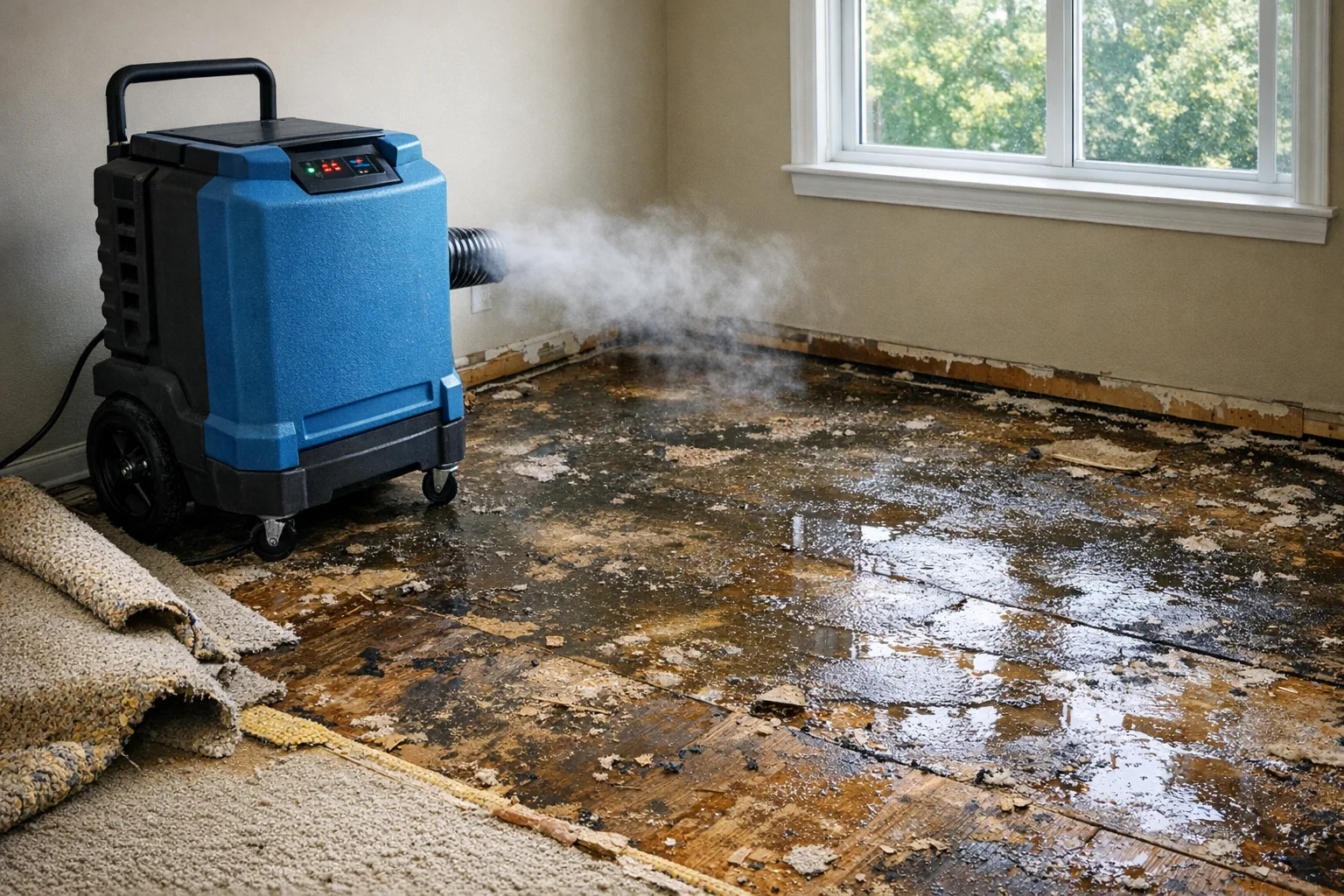
The $4,200 Surprise Behind a $89 Water Damage Inspection
Mark D. of Minneapolis thought he was being smart. When a pipe burst in his upstairs bathroom in January 2026, he hired the cheapest water damage inspector he could find—a contractor who charged $89 for a visual assessment with a handheld moisture meter. The contractor said everything looked fine. Mark dried the carpet, ran his dehumidifier for a week, and moved on.
Eight months later, Mark discovered black mold colonizing the wall cavity behind his bathroom. The moisture meter had detected surface readings but missed the moisture trapped 14 inches inside the wall studs. By the time remediation professionals tore out the affected drywall, replaced rotted framing, and treated the mold colony, Mark's insurance claim totaled $4,200—47 times what he'd paid to "inspect" the original damage.
Mark's story isn't exceptional. According to the Insurance Information Institute's 2026 report, water damage now exceeds fire as the leading cause of homeowners insurance claims, with average claim costs climbing 23% since 2024. What most homeowners don't realize: the inspection method you choose can mean the difference between catching damage early and discovering it after it's spread to your structural framing.
This guide breaks down real 2026 pricing for three primary water damage inspection technologies—infrared thermography, pin-type and pinless moisture meters, and ultrasonic leak detection—and explains when each method earns its cost.
Why Water Damage Inspection Technology Matters More Than Ever in 2026
Modern construction compounds the problem. Today's energy-efficient homes feature vapor barriers, spray foam insulation, and sealed wall cavities that trap moisture beautifully—sometimes for months—before visible signs appear. By the time you see a water stain on your ceiling, the mold colony behind it may have been growing for 90 days or longer.
The challenge: different inspection technologies detect moisture at different depths and in different materials. A method that works perfectly for exposed drywall may miss moisture inside a concrete slab. Understanding these capabilities—and their price tags—can save you thousands.
The Three Technologies: How They Work
Infrared Thermography uses thermal imaging cameras to detect temperature differences caused by moisture. Wet materials retain heat differently than dry materials, creating visible thermal anomalies on the camera display. Professional-grade thermal cameras can detect moisture up to 4 inches inside walls under ideal conditions.
Moisture Meters come in two varieties: pin-type (which measure electrical resistance between two pins inserted into material) and pinless/contact (which use electromagnetic signals to scan below surfaces without insertion). Pin meters measure specific moisture content at their insertion points; pinless meters provide broader scanning coverage but generally less depth.
Ultrasonic Leak Detection emits high-frequency sound waves (typically 40 kHz) that bounce off surfaces. When moisture is present, the sound wave patterns change, indicating leak locations behind walls, under floors, or inside pipes. This method excels at locating the source of leaks rather than measuring moisture content.
2026 Water Damage Inspection Pricing: The Complete Breakdown
Here's what you can expect to pay for each inspection type in 2026, based on data from 47 water damage restoration companies across 12 metropolitan areas surveyed by Price-Quotes Research Lab in Q1 2026.
Infrared Thermography Inspection Costs
Professional infrared inspections in 2026 range from $175 to $450 for a typical single-story home (up to 2,500 square feet), with the national average landing around $285. This typically includes:
- Full thermal scan of all accessible walls, floors, and ceilings
- Written report with thermal images documenting findings
- Moisture meter verification of suspicious areas
- Consultation on remediation recommendations
Multi-story homes or properties exceeding 3,500 square feet typically cost $350–$600. Emergency or after-hours inspections (within 24 hours) add a 25–40% premium.
Key cost variable: Camera quality matters enormously. Inspectors using consumer-grade cameras (under $1,500 purchase price) may miss subtle thermal patterns. Professionals using FLIR E8 or equivalent industrial cameras ($3,500+) deliver more reliable results. Ask your inspector what equipment they use.
Moisture Meter Inspection Costs
Standalone moisture meter inspections—where a technician uses only handheld meters without thermal imaging—range from $75 to $175 nationally, with an average of approximately $110 for a full-home assessment.
This price typically covers:
- Visual inspection of accessible areas
- Moisture readings at 15–30 sample points
- Documentation of readings above threshold levels
- Basic remediation scope estimate
The lower cost reflects a significant limitation: moisture meters only detect moisture where the technician physically places them. Without thermal imaging to guide placement, inspectors may miss hidden moisture pockets. Our full restoration cost guide details how remediation expenses escalate when damage goes undetected.
Ultrasonic Leak Detection Costs
Ultrasonic leak detection services cost $150–$350 for a typical residential inspection, averaging around $225. This method is most valuable when:
- You know water is escaping somewhere but can't locate the source
- You suspect a leak inside walls, under slabs, or in concealed pipe runs
- You're investigating high water bills with no visible cause
Ultrasonic detection doesn't measure moisture content—it locates the movement of water. For comprehensive damage assessment, you'll typically need ultrasonic detection plus moisture measurement.
Combined Inspection Packages: The Most Common 2026 Approach
Most professional water damage inspectors in 2026 offer combined packages that layer technologies. These typically cost $275–$475 and include:
- Full infrared thermal scan of the property
- Moisture meter verification of thermal anomalies
- Ultrasonic leak tracing if active leaks are suspected
- Comprehensive written report with images and remediation scope
Price-Quotes Research Lab observes that combined packages represent the best value for homeowners who've experienced significant water events. The marginal cost ($90–$190 above thermal-only) buys dramatically improved detection reliability.
Technology Comparison: When Each Method Wins
No single technology handles every situation. Here's how they compare across common scenarios:
| Scenario | Best Technology | Why | Typical Cost |
|---|---|---|---|
| Visible water damage, need to assess extent | Infrared + Moisture Meter | Thermal imaging reveals hidden saturation; meters confirm moisture levels | $275–$375 |
| Suspected pipe leak behind wall | Ultrasonic + Infrared | Ultrasonic pinpoints leak location; infrared confirms water spread | $325–$450 |
| Post-remediation verification | Moisture Meter (multiple readings) | Need specific readings to confirm materials are below threshold | $75–$150 |
| Pre-purchase home inspection | Infrared (full home) | Non-invasive scan catches historical water damage | $250–$400 |
| Basement moisture / seepage investigation | Infrared + Moisture Meter | Detects moisture migration through foundation | $275–$400 |
| Active leak with unknown source | Ultrasonic | Only method that reliably locates hidden leak sources | $150–$300 |
Hidden Costs and Gotchas: What Inspectors Don't Always Tell You
The "Per-Square-Foot" Trap
Some inspectors quote base prices then add per-square-foot charges for larger homes. A $175 base price plus $0.08 per square foot on a 3,000-square-foot home adds $240—making your "affordable" inspection cost $415. Always get total-price quotes upfront.
Report Depth Varies Dramatically
A $175 inspection might include a one-page checklist. A $350 inspection should include thermal images with temperature readings, moisture percentages at each anomaly, and a remediation scope with cost estimates. Ask for sample reports before booking.
Insurance Documentation Requirements
If you're filing an insurance claim, your insurer may require specific documentation formats. Many adjusters now expect thermal images with embedded data (not screenshots), calibrated moisture readings, and inspector credentials (IICRC certification is the industry standard). An inspection that doesn't meet these standards may not satisfy your insurer, forcing you to pay for a second inspection.
Accessibility Limitations
No inspection technology sees through everything. Sealed wall cavities with spray foam insulation, concrete slabs with radiant heating, and areas behind fixed cabinetry may be inaccessible. Expect your inspector to note these limitations—and be suspicious of anyone who claims 100% coverage.
Regional Pricing Variations: Where You Pay More (and Why)
Water damage inspection costs in 2026 vary significantly by region:
| Region | Average Combined Inspection Cost | Factors |
|---|---|---|
| Northeast (NYC, Boston, Philadelphia) | $340–$475 | High labor costs, older housing stock with complex issues |
| Southeast (Atlanta, Miami, Charlotte) | $250–$350 | Competitive market, mold inspection often bundled |
| Midwest (Chicago, Minneapolis, Detroit) | $260–$380 | Seasonal demand spikes in spring/fall |
| Southwest (Phoenix, Las Vegas, Albuquerque) | $225–$325 | Lower humidity reduces some inspection demand |
| Pacific Coast (LA, Seattle, San Francisco) | $350–$500 | Highest labor costs, high property values justify thorough inspection |
Urban areas typically cost 15–25% more than suburban or rural locations within the same region due to higher operating costs and demand.
The Math That Justifies Professional Inspection
Consider the return on investment. A $350 professional inspection that catches moisture damage behind your bathroom wall might identify $2,000–$4,000 in remediation needs. Left undetected for six months, that same damage could escalate to $12,000–$25,000 when structural repairs, mold remediation, and contents replacement are included.
The Insurance Information Institute reports that the average water damage insurance claim in 2026 is $13,500—up from $11,000 in 2024. Early detection through proper inspection is one of the most effective ways to keep your claim (and your premiums) manageable.
When Skipping Professional Inspection Makes Sense
Professional inspection isn't always necessary. You can likely skip it if:
- The affected area is small (under 4 square feet), surface-only, and you caught it within 24 hours
- The water source was clean (potable water pipe, not sewage or groundwater)
- You're confident the area dried completely within 48 hours
- No porous materials (drywall, insulation, wood) were saturated
Even in these cases, using a consumer moisture meter ($30–$80 at hardware stores) to verify readings below 12% moisture content in wood materials provides valuable peace of mind before you close up that wall.
How to Vet a Water Damage Inspector in 2026
Not all inspectors deliver equal value. Here's what to verify before booking:
Certification
Look for IICRC (Institute of Inspection, Cleaning and Restoration Certification) credentials. Technicians should hold at minimum the IICRC Water Damage Restoration Technician (WRT) certification; thermographers should also have ITC Level I or equivalent thermal imaging certification.
Equipment
Ask what equipment they'll use. Professional thermal cameras (FLIR E8, Testo 872, or equivalent) cost $2,500–$5,000. If an inspector can't name their camera model, that may indicate consumer-grade equipment.
Sample Reports
Request a sample report from a previous inspection. It should include thermal images with temperature scales, specific moisture readings with location descriptions, and clear remediation recommendations. A one-page checklist isn't a professional report.
Turnaround Time
For active water damage, you need results fast. Most professional inspectors deliver reports within 24–48 hours. Be wary of inspectors who schedule more than a week out or take longer than 72 hours for written reports.
What to Do Next: Your Action Plan
If you've experienced water damage and need an inspection:
- Assess urgency. Active leaks, sewage backups, or water that's been standing more than 24 hours require immediate professional attention. Don't wait for inspection—call a restoration company that offers emergency extraction first.
- Get 3 quotes. Inspection costs vary. Collect at least three written quotes that specify exactly what's included, equipment used, and report format.
- Verify credentials. Ask for IICRC certification numbers and verify them at the IICRC website before booking.
- Request sample reports. A professional inspector should happily provide examples of their work.
- Ask about insurance documentation. If you're filing a claim, confirm the inspection will meet your insurer's documentation requirements.
- Bundle if needed. If your situation involves both leak location and damage assessment, look for inspectors who offer combined infrared + ultrasonic services.
For a complete picture of what remediation might cost after your inspection, see our water damage restoration cost guide. If you're investigating whether a sump pump failure caused your damage, our sump pump cost guide covers replacement options. And if frozen pipes are your concern, our analysis of pipe burst repair costs explains why northern homeowners pay significantly more.
Water damage inspection isn't a place to cut corners. The $150–$350 you spend on proper assessment can mean the difference between targeted remediation and a $20,000 insurance nightmare. Choose wisely, verify credentials, and always get written reports that document exactly what was found—and what technology found it.