Sump Pump Installation and Replacement Costs: The $800 Insurance Policy for Your Basement
Sump Pump Installation and Replacement Costs: The $800 Insurance Policy for Your Basement
Published 2026-04-10 • Price-Quotes Research Lab Analysis
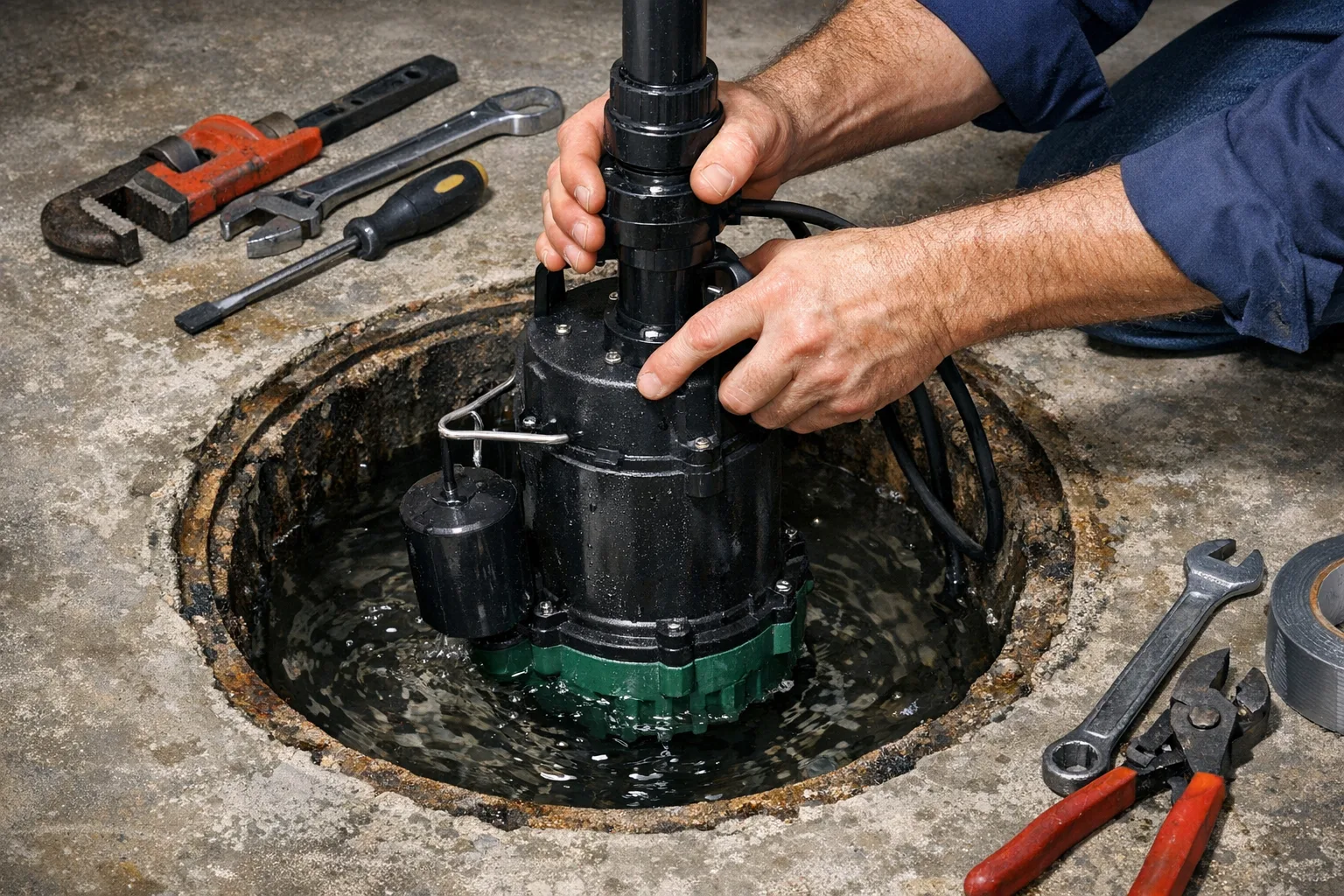
The $800 Device That Prevents $30,000 Flood Claims
Here's a number that makes insurance actuaries sweat: the average basement water damage claim in the United States runs between $4,000 and $30,000. The device that prevents that catastrophe? A sump pump costs between $100 and $800 at retail, with full professional installation typically running $600 to $2,500 depending on your situation. That's roughly a 15-to-1 return on investment. Most homeowners, according to Basement Calculator's 2025 analysis, spend around $1,200 to $1,500 for a complete system setup. Price-Quotes Research Lab estimates put the median cost right around $1,475 when you factor in both unit and labor. The variation exists because your specific situation determines everything—from soil composition to basement depth to whether you're installing this system for the first time or replacing an aging unit.
People consistently underestimate sump pumps until they don't. Until water is pooling in their basement, furniture is ruined, drywall needs replacing, and they're arguing with their insurance company about coverage limits. The homeowners who sleep easy? They spent roughly a thousand dollars on preventive infrastructure. This guide breaks down exactly where that money goes.
Understanding Sump Pump Types and Their Price Tags
Not all sump pumps operate the same way, and the technology you choose directly impacts your upfront cost, longevity, and ongoing maintenance requirements. This Old House plumbing experts identify two primary categories that dominate the market: pedestal and submersible units.
Pedestal sump pumps position the motor above the sump pit, mounted on a column that extends above the water level. These units typically cost between $100 and $300 for the pump alone. The motor sits high enough that it rarely suffers water damage, which extends lifespan significantly. Installation tends to be simpler because there's no need to submerge sensitive electronics. The trade-off? Pedestal pumps are louder, more visually obtrusive, and generally less powerful than their submersible counterparts. They work best for smaller basements with moderate water intrusion issues.
Submersible sump pumps live entirely underwater in the sump pit. This design allows for more powerful motors, quieter operation, and better water removal efficiency. Submersible units range from $200 to $800 depending on horsepower and features, with professional installation pushing the total project cost higher due to the complexity of pit preparation and electrical work. Remodeling Expense's 2026 cost calculator places submersible installations in the $1,350 to $3,825 range for a full setup, positioning them as the premium choice for homeowners dealing with significant water pressure or finished basements worth protecting.
The decision between pedestal and submersible isn't purely financial. It's a calculation about what your basement faces each spring when snowmelt and rain combine to test your foundation's water management systems. A finished basement with $50,000 in renovations demands different protection than an unfinished storage space.
The True Cost Breakdown: What You're Actually Paying For
When contractors quote you $1,500 for sump pump installation, that number doesn't appear from nowhere. Price-Quotes Research Lab has analyzed industry pricing data to break down where every dollar flows during a typical installation.
The unit itself accounts for $100 to $800 depending on quality and capacity. Budget pumps under $200 often lack the horsepower to handle heavy water flow and tend to burn out faster. Mid-range units between $300 and $500 offer the best value for most residential applications, providing reliable performance without unnecessary premium features. High-end pumps above $500 include battery backup systems, smart monitoring capabilities, and commercial-grade components designed for continuous operation.
Labor represents the largest single expense in most installations, typically consuming $500 to $1,700 of the total project cost. Fixr's contractor survey data shows that professional plumbers charge between $45 and $200 per hour, with complex installations involving concrete breaking, new electrical circuits, or French drain systems running toward the higher end. A straightforward replacement in an existing pit might take two to three hours. A new installation requiring excavation and electrical work can demand six to eight hours of labor across multiple tradespeople.
Materials and extras add $150 to $400 to most installations. This includes PVC piping and fittings, check valves to prevent backflow, gravel for pit bedding, concrete for sealing around the pit, and electrical components. Battery backup systems—highly recommended in areas prone to power outages during storms—add $200 to $500 depending on battery quality and capacity.
The Mr. Pipey 2026 cost guide categorizes installations into three tiers that help homeowners understand where their project falls: Basic installations ranging from $790 to $1,045 total, Better systems between $1,350 and $1,875, and Best installations from $2,225 to $3,825. The difference between tiers isn't just pump quality—it's about pit preparation, drainage system complexity, and backup power integration.
Replacement vs. New Installation: The Cost Difference Matters
Here's where many homeowners get confused, and contractors sometimes exploit that confusion. Replacing an existing sump pump costs dramatically less than installing a new system, and understanding why helps you budget accurately and avoid overpaying.
A replacement installation—where you're swapping an old pump for a new one in an existing pit—typically runs between $200 and $600 according to Basement Calculator's cost analysis. The pit already exists, the electrical is already wired, and the discharge line is already in place. A contractor spends an hour or two removing the old unit, installing the new pump, testing the system, and cleaning up. That's a $200 to $600 job, not a $1,500 job.
A new installation demands everything replacement doesn't have. Breaking concrete to excavate a new pit. Running new electrical circuits to code. Installing discharge piping if none exists. Preparing the pit with gravel bedding and sealed walls. This work multiplies the hours and materials required. HomeGuide's contractor data confirms that new installations range from $600 to $2,500, with the higher end representing complex jobs involving significant concrete work or drainage system integration.
When evaluating estimates, always clarify whether the quote is for replacement or new installation. Some less reputable contractors quote replacement prices for new installation work, then hit homeowners with change orders once they've committed. Get written specifications that detail exactly what work the price includes.
When Replacement Can't Wait: Warning Signs and Urgency
Sump pumps fail at the worst possible times. Statistics from the Plumbing-Heating-Cooling Contractors Association indicate that most sump pump failures occur during heavy rainstorms—the exact moment you need the equipment functioning. Waiting for obvious failure to initiate replacement invites disaster.
Age is the most reliable failure predictor. Most sump pumps last seven to ten years with proper maintenance. If your unit is approaching that age range, budget for replacement during your next home maintenance season rather than waiting for symptoms. Pump motors wear out gradually, losing pumping capacity until they can no longer keep up with demand. By the time you notice the basement feeling damp, water table rise during a storm might overwhelm a weakened pump.
Rust and corrosion on visible components indicate internal damage you can't see. Check the discharge line for orange or brown staining. Inspect the float mechanism for free movement. Listen for grinding or rattling sounds when the pump activates—these noises suggest bearing wear that will eventually seize the motor.
Frequent cycling—the pump turning on and off repeatedly—strains the motor and shortens lifespan. This symptom often indicates a stuck check valve or incorrect pump sizing rather than pump failure itself, but the underlying issue demands attention before complete failure occurs.
Visible water in the pit when it hasn't rained suggests the pump isn't removing all incoming water between activation cycles. Either the pump lacks capacity for your water table, or something is obstructing the discharge line. Either scenario warrants professional assessment.
DIY Installation: What Homeowners Actually Save
The DIY route appeals to budget-conscious homeowners, and in limited circumstances, it makes sense. Understanding exactly what you're taking on—and the risks involved—prevents expensive mistakes.
A skilled homeowner with plumbing experience can replace an existing sump pump for the cost of the unit alone: $200 to $600. The work involves shutting off the old pump, disconnecting electrical connections (which requires following lockout/tagout procedures for safety), removing the old unit, installing the new pump, reconnecting the discharge line, and testing. Basement Calculator estimates that DIY replacement saves the $200 to $500 labor component of a professional installation.
New installation, however, presents substantially higher complexity and risk. The work requires concrete breaking (rented equipment, $50 to $100 per day), electrical work to code (permits and inspections, or unpermitted work that creates insurance complications), proper pit sizing, gravel bedding, waterproof sealing, and discharge line routing. Mistakes in any of these areas create problems that cost more to fix than the original professional installation would have. A pit dug too shallow floods during heavy rain. Electrical work not to code creates fire hazard and insurance coverage issues. Improper sealing allows groundwater to bypass the pit entirely.
For new installations, professional installation isn't just convenience—it's risk management. The $500 to $1,700 labor cost buys expertise in handling variables that homeowners can't anticipate until they're in the middle of a project. Price-Quotes Research Lab recommends budgeting for professional installation on any new construction or first-time installation, reserving DIY approach for straightforward replacements where the existing infrastructure is sound.
Annual Maintenance: The $100 Investment That Prevents $1,500 Repairs
Every sump pump benefits from annual maintenance that costs under $100 in materials and takes thirty minutes of attention. This maintenance catches problems before they become emergencies and extends pump lifespan significantly.
The maintenance checklist is straightforward. First, inspect the pit for debris, gravel, or sediment accumulation. Sump pits collect everything from foundation dust to broken glass to abandoned children's toys. Any material that enters the pit risks clogging the pump intake or damaging the float mechanism. Remove debris with a wet/dry vacuum.
Second, test the pump by pouring water into the pit until the float activates. Watch the pump turn on, observe water discharge through the exit point, and confirm the pump shuts off when water level drops. This test validates that the motor functions, the float operates freely, and the discharge line isn't blocked.
Third, inspect the check valve. This inexpensive component ($15 to $30) prevents water from flowing back into the pit after the pump shuts off. A failed check valve causes the pump to cycle rapidly, burning out the motor prematurely. If you hear the pump cycling rapidly or see water splashing back into the pit after shutoff, replace the check valve immediately.
Fourth, test any battery backup system. Battery backup units sit idle most of the time, which means their batteries degrade without anyone noticing. Test the backup system monthly and replace batteries every two to three years. The backup battery costs $100 to $200 but provides peace of mind during power outages when water intrusion risk peaks.
Professional maintenance services run $100 to $250 annually and include thorough cleaning, electrical inspection, and component testing. For homeowners uncomfortable performing their own inspection, this annual service catches issues that DIY inspection might miss and provides documentation that supports warranty claims if problems develop.
Factors That Push Installation Costs Higher
Every home presents unique conditions that affect sump pump installation cost. Understanding these variables helps you evaluate estimates intelligently and avoid surprises when the final invoice arrives.
Basement depth and water table determine required pump horsepower. Deeper basements with high water tables demand more powerful pumps capable of pushing water greater distances against higher pressure. This might mean upgrading from a 1/3 horsepower unit to a 1/2 or 3/4 horsepower pump, adding $100 to $300 to the unit cost and potentially requiring larger discharge piping.
Soil composition affects how much water your foundation receives. Rocky soil drains quickly, reducing pump workload. Clay soil retains water and creates hydrostatic pressure against foundation walls, increasing the volume of water requiring removal. Homes in clay-heavy areas benefit from additional perimeter drainage, which multiplies installation complexity and cost.
Existing drainage systems complicate replacement work. If your home has interior or exterior French drains channeling water to the sump pit, replacement requires careful attention to ensure the new pump handles the combined flow. Some older drainage systems were undersized by modern standards, and a pump upgrade alone won't solve chronic flooding if the underlying drainage infrastructure is inadequate.
Discharge location matters for both cost and legal compliance. Some municipalities regulate where sump pumps can discharge—directly into storm sewers, into dry wells, or onto specific areas of your property. If your current discharge location violates current codes, relocation adds $300 to $1,000 to the project. Plumbing Guider's installation guide notes that discharge line clogs from ice accumulation or debris represent a common failure point, suggesting that proper routing and slope calculation during installation prevents future headaches.
Accessibility influences labor time significantly. A basement with a poured concrete floor, limited headroom, and no existing pit demands more time and equipment than a basement with good access and an existing pit. Some homes have foundation walls made of materials that resist standard concrete breaking techniques, requiring specialized equipment and expertise.
Questions to Ask Before Signing Any Contract
Getting multiple estimates protects against overpaying, but only if you're comparing apples to apples. Before selecting a contractor, get answers to these questions in writing.
Does the estimate include permit fees? Some contractors exclude permit costs from their initial quote, surprising homeowners with $100 to $300 additional charges after work begins. A complete estimate includes all permit and inspection fees required by your municipality.
What's the warranty on both parts and labor? Manufacturer warranties on pumps typically range from one to five years depending on brand and model. Labor warranties—covering the installation work itself—should extend at least one year. Contractors who don't warranty their labor either lack confidence in their work or plan to be unavailable if problems develop.
What happens if the installation reveals additional problems? Reputable contractors inspect the existing electrical system, discharge line, and pit condition before providing final quotes. Get clarity on how the contract handles scenario where unexpected conditions require additional work. A time-and-materials agreement for unforeseen complications protects both parties when surprises emerge.
Who obtains inspections? In most jurisdictions, electrical work associated with sump pump installation requires permit and inspection by the local building department. Some contractors handle this process as part of their service; others expect homeowners to navigate bureaucracy independently. Understand who's responsible before work begins.
The Bottom Line: What You Should Actually Budget
For replacement of an existing sump pump in good condition, budget $400 to $700 for a mid-range pump and professional installation. This covers the unit, labor, and basic materials. You'll spend $500 to $800 total if you include a new check valve and minor adjustments.
For new installation in an existing basement, budget $1,200 to $2,000 for a quality submersible pump system installed by a professional. This assumes the electrical service is adequate and no significant concrete work is required.
For new installation requiring pit excavation and electrical service upgrades, budget $2,000 to $3,500. These projects involve permits, concrete breaking, new electrical circuits, and potentially French drain integration.
Regardless of which scenario matches your situation, include $100 to $250 annually for maintenance and plan to replace batteries in backup systems every two to three years at $150 to $300 per replacement. These ongoing costs represent insurance premiums against far larger flood remediation expenses.
The homeowners who regret their sump pump investment are rare. The homeowners who skipped the investment and faced flooded basements wish they'd spent differently. At $800 for a solid mid-range system installed, this is among the highest-ROI home improvements available.