Mold Remediation Costs in 2026: The $500 Problem That Becomes a $30,000 Nightmare
Mold Remediation Costs in 2026: The $500 Problem That Becomes a $30,000 Nightmare
Published 2026-04-11 • Price-Quotes Research Lab Analysis
The $500 Mold Problem Nobody Fixes
Most homeowners spot mold for the first time in a bathroom corner, under a sink, or in a basement corner they haven't checked since they moved in. It's small. It's fuzzy. It's probably nothing, they tell themselves. Six months later, they've got black mold spreading behind the drywall, and a remediation bill that costs more than their last vacation.
Mold remediation costs in 2026 range from $500 for a minor patch job to $30,000 or more for full structural remediation in a large home. According to This Old House's 2026 cost guide, the national average lands somewhere between $2,000 and $6,000 for moderate remediation projects. But averages lie. The real cost depends on three variables: square footage, mold type, and how long you've been ignoring it.
This is the definitive breakdown of what you'll actually pay to kill mold in your home this year — and why the $500 fix you keep putting off is the only one that matters.
Why 2026 Is a Particularly Bad Year for Mold
The conditions that create mold — sustained moisture, humidity, and water intrusion — have worsened across most of the United States. Industry analysts at Verified Remediation note that rising insurance premiums and tighter coverage requirements have forced homeowners to address mold problems earlier than they historically would have, which is actually driving up average remediation costs as more people enter the system. In previous decades, homeowners might have deferred the problem indefinitely. Insurance companies won't cover a house with known mold exposure, so now there's real financial pressure to deal with it immediately.
That said, the pool of certified remediators hasn't grown proportionally. Training and certification requirements have tightened, particularly after new EPA-aligned guidelines rolled out across several states in 2024 and 2025. Fewer qualified technicians, higher demand, same or slightly elevated supply chain costs for antimicrobial treatments. That's a pricing pressure that doesn't reverse easily.
The Cost Breakdown by Scope
Mold remediation pricing follows a rough tier structure, though every job has variables that push it in one direction or another. Here's the honest grid:
Tier 1: Minor Remediation ($500 – $1,500)
This covers surface mold on less than 10 square feet — think a patch on a shower ceiling, a small area behind a toilet, or mold on a single bathroom wall section. Per Rock Bottom Restoration's 2026 pricing breakdown, this tier typically involves single-room treatment, HEPA vacuuming, antimicrobial application, and basic containment. No demolition. No gutting. The job might take a single technician a few hours.
Cost drivers: Type of surface (porous materials like drywall cost more than tile), accessibility, and whether the moisture source has been identified and fixed. If the source — a leaking pipe, a cracked seal — hasn't been addressed, you're paying twice.
Tier 2: Moderate Remediation ($1,500 – $5,000)
This is where most homeowners land. Moderate remediation covers 10 to 100 square feet of affected area — multiple walls, a ceiling, portions of a crawl space. This Old House estimates most bathroom or single-room mold remediation falls in this range, particularly when drywall removal is involved. Technicians set up full containment barriers, run negative air pressure machines, remove contaminated materials, and treat the underlying structure with industrial-grade biocides.
You'll also typically pay for air quality testing before and after — usually $250 to $500 per sample, and you want at least two samples (background and affected area) to document the problem and clearance.
Tier 3: Extensive Remediation ($5,000 – $15,000)
When mold has spread through HVAC systems, into load-bearing wall cavities, or across an entire basement, you're in this range. Certified Water and Fire's Houston market data shows that basement mold remediation in humid climates routinely crosses into $8,000-$12,000 territory, especially when plumbing failures or flooding are involved. The remediation team may include an industrial hygienist, multiple technicians over multiple days, and coordination with general contractors for structural repairs.
This tier almost always requires demolition — removal of drywall, insulation, subflooring, or ceiling panels — which then requires reconstruction costs on top of the remediation itself. A $10,000 remediation bill often comes with an additional $8,000 to $20,000 in repair and restoration costs, depending on the scope.
Tier 4: Full Structural Remediation ($15,000 – $30,000+)
This is the nightmare scenario. Foundation water intrusion, long-ignored black mold colonizing multiple floors, or a catastrophic event like a sewage backup that saturates a home's structure. Verified Remediation's cost guide cites full-home remediation projects routinely hitting $20,000 to $30,000 before reconstruction costs are factored in. In extreme cases — multi-family properties, historic homes, or structures requiring hazardous materials protocols — costs exceed $50,000.
The reason these numbers get so extreme is stacking: remediation labor, material removal, disposal fees, structural drying, antimicrobial treatment across thousands of square feet, air quality monitoring, and reconstruction. Each of these line items is its own invoice from a different party.
The average mold remediation project in 2026 costs $3,200 nationally, but the median tells a different story. Half of all projects exceed $4,500 once you include testing, repairs, and the contractor visits most homeowners don't anticipate until they're already on the invoice.
Mold Type: The Variable That Determines Everything
Not all mold is priced equally. Insurers, lenders, and remediators categorize mold by the difficulty and hazard level of removal. This matters for your wallet in concrete ways.
Common Mold (Aspergillus, Cladosporium, Penicillium)
These are the everyday molds — the ones that show up on food left too long in the fridge, on shower grout, in basement corners with mild dampness. Per Verified Remediation's classification guide, common molds on non-porous surfaces (tile, metal, hard plastic) can sometimes be handled by a determined homeowner with commercial antimicrobial cleaners, scrub brushes, and proper PPE. When professionals handle these, the cost is on the lower end of the scale because the treatment is straightforward and the containment requirements are minimal.
Stachybotrys chartarum (Black Mold)
Black mold is the one that makes headlines and scares homeowners into acting. Stachybotrys produces mycotoxins that can cause respiratory irritation, neurological symptoms, and immune system disruption with prolonged exposure. This Old House notes that black mold remediation requires hazmat-level containment protocols, full respiratory protection for technicians, specialized HEPA filtration running continuously, and post-remediation clearance testing by a certified industrial hygienist. This adds 30% to 60% to the base remediation cost compared to common mold in the same footprint.
The stigma matters too. If a home inspector finds Stachybotrys during a sale, the buyer has leverage to negotiate concessions. If a lender's appraiser notes it, the loan may be held up until clearance documentation is provided. Every day of delay costs money.
Toxic Mold (Chaetomium, Fusarium, Memnoniella)
Less common than Stachybotrys but equally serious, toxic mold species require the same level of response as black mold and sometimes more. Remediation companies often won't quote these jobs without an industrial hygienist assessment first — typically $500 to $1,500 just to get the scope of work documented. The assessment fee is separate from the remediation itself and almost never gets cheaper because the problem turned out to be smaller than expected.
The Hidden Costs Nobody Talks About
Most homeowners budget for the remediation itself and get blindsided by the supplementary expenses. Here's what actually appears on the invoices:
- Pre-remediation assessment: $300 – $1,500. An industrial hygienist or certified mold inspector samples the affected area, identifies the species, measures spore counts, and documents the moisture source. Without this, remediators quote blind — and blind quotes tend to grow when the job actually starts.
- Post-remediation clearance testing: $250 – $800. Required by most lenders and home warranty companies before they'll close a transaction or continue coverage. Skipping it to save money is a false economy. A home that can't prove clearance is a home you can't sell or insure easily.
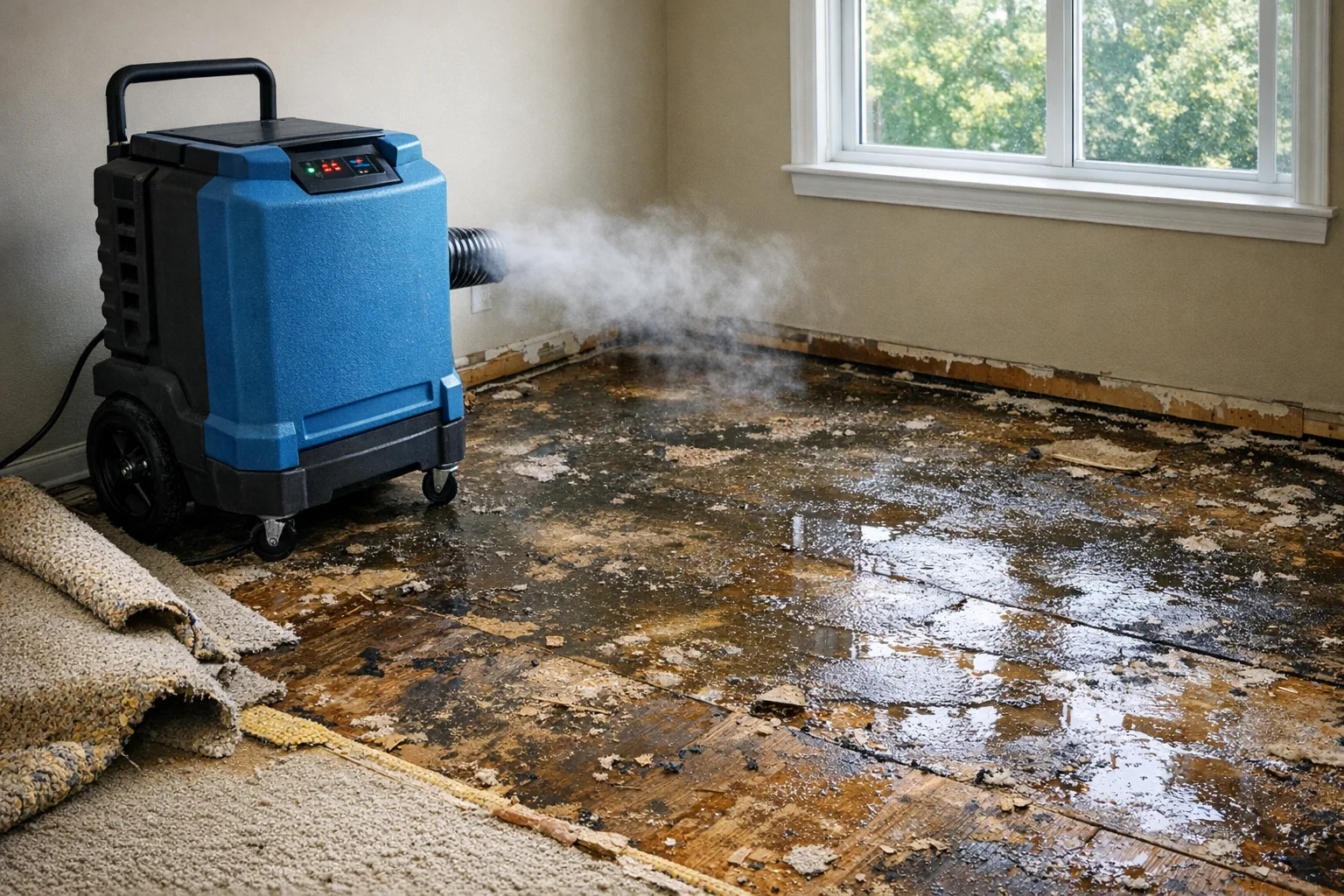
- Structural drying: $500 – $3,000. If the mold is being caused by active moisture — a leaking pipe, groundwater seepage, condensation — that moisture source has to be dried out before remediation begins. Industrial dehumidifiers and air movers running 24/7 for several days aren't cheap, and they run around $200 to $500 per day per unit.
- Demolition and reconstruction: $2,000 – $25,000. This is the bill that transforms a manageable remediation into a catastrophe. Every square foot of drywall removed, every section of insulation replaced, every painted surface repped — each at contractor rates that run $50 to $150 per hour depending on market and trade.
- Disposal fees: $200 – $1,500. Contaminated materials have to go somewhere. Most municipalities charge disposal fees for construction debris, and moldy materials sometimes require special handling protocols that push costs higher.
- Temporary housing: $1,000 – $5,000. If the affected area is large enough, or if the remediation involves HVAC contamination, you may not be able to occupy portions of your home for several days to two weeks. Hotel costs, meal expenses, and the general disruption add up fast.
Regional Pricing: Why Your Zip Code Changes the Bill
Mold remediation costs aren't uniform across the country. The same 100-square-foot basement mold job carries a different price tag in Houston versus Minneapolis, and the difference isn't trivial.
In Houston and the broader Gulf Coast region, high humidity and frequent flooding events mean mold remediators are in constant demand. The market has normalized higher prices — moderate remediation routinely runs $4,000 to $8,000 in the Houston metro area, and homeowners report waiting two to four weeks for an available certified team during peak seasons (late summer and post-hurricane). The volume of work means experienced remediators can charge a premium, and insurance companies in the region have been paying these rates long enough that they're baked into the local market expectations.
The Northeast and Pacific Northwest carry their own cost drivers: older housing stock with basements, crawl spaces, and construction methods that trap moisture. Rock Bottom Restoration's regional analysis for 2026 shows that New England homeowners pay a 15% to 25% premium over the national average, driven by historic home construction (plaster walls, older drainage systems) that complicates remediation. In the Pacific Northwest, the combination of rain exposure and older homes means crawl space mold is endemic — remediators there see it so frequently that they've streamlined some processes, but the baseline cost of living keeps labor rates elevated.
The Midwest and Southwest offer the most favorable pricing environments — not because mold is less common (in the Midwest, basement mold is practically a seasonal tradition) but because competition among remediators is fiercer and the cost of living keeps labor competitive. Homeowners in Dallas, Phoenix, and Denver report average remediation costs 10% to 20% below the national average for comparable scope.
The Cost Comparison Table
| Remediation Scope | Typical Square Feet | Base Remediation Cost | With Testing + Minor Repairs |
|---|---|---|---|
| Minor surface mold | <10 sq ft | $500 – $1,500 | $800 – $2,200 |
| Single-room moderate | 10 – 100 sq ft | $1,500 – $5,000 | $2,500 – $7,000 |
| Multi-room extensive | 100 – 500 sq ft | $5,000 – $15,000 | $8,000 – $22,000 |
| Full structural | 500+ sq ft | $15,000 – $30,000+ | $20,000 – $45,000+ |
| Black mold (any scope) | Varies | 30–60% surcharge | 40–80% total premium |
*All figures are 2026 estimates based on aggregated market data from certified remediation companies. Actual costs vary by region, property type, moisture source, and accessibility.
DIY vs. Professional Remediation: When the $500 Myth Kills You
There's a persistent belief that small mold patches can be handled with a spray bottle of vinegar, some bleach, and a weekend afternoon. Sometimes that's true. More often, it's the opening move in a process that ends with professional remediation at double the cost it would have been six months earlier.
Here's the distinction: if the mold is on a hard, non-porous surface — tile, glass, metal — and the moisture source has been permanently fixed, and the affected area is smaller than your two hands put together, DIY treatment is reasonable. Use an EPA-registered fungicidal cleaner, wear an N95 mask and gloves, ensure ventilation, and monitor the area for six months. If it comes back, call a pro immediately.
But Verified Remediation's guidance is blunt: any mold on porous materials (drywall, wood, insulation, ceiling tiles, carpet padding) requires professional assessment before you touch it. Bleach on moldy drywall doesn't kill the mold roots — it just bleaches the surface, making it look clean while the colonization continues underneath. Spray-and-wipe treatment of porous surfaces is, at best, a delay tactic that gives you false confidence.
The threshold we recommend: if you can't see every angle of the affected area, if the mold is behind a wall or under flooring, or if you've already tried cleaning it once and it returned — you need a professional assessment. The assessment costs $300 to $1,500. Compare that to the difference between catching a problem at 10 square feet versus discovering it at 80 square feet. That's the entire economics of mold remediation.
How Mold Affects Home Value and Saleability
Mold doesn't just cost money to fix — it costs money even when it's already fixed, because buyers and lenders know it's there. This Old House's real estate analysis notes that undisclosed mold problems are among the most common causes of failed real estate transactions, with buyers walking away from deals after inspection findings that reveal undisclosed contamination. The average cost of that failure — in carrying costs, delayed moves, renegotiation stress, and price concessions — can exceed the remediation bill itself.
Here's the chain reaction: Seller has minor mold, doesn't disclose. Buyer gets inspection. Inspector finds mold. Buyer demands remediation and price reduction. Seller either remediates (cost) and drops price (cost), or the deal dies. If the mold was caused by a structural issue (bad drainage, foundation crack, plumbing leak), the lender may require the structural issue be repaired as a condition of financing — even if the mold itself was addressed. Now you're coordinating a plumber, a foundation contractor, a mold remediator, and an inspector across a 30-day closing window.
Every day of that chain is money. Interest rate locks expire. Rentals get released. Job start dates pass. The mold was $2,000 to fix. The deal fallout cost $12,000.
Insurance and Mold: What Actually Gets Covered
Homeowners insurance coverage for mold is one of the most misunderstood lines in the entire industry. Most standard policies cover mold if it results from a sudden, accidental water event — a pipe burst, a storm-induced roof leak, a dishwasher overflow. They typically don't cover mold resulting from long-term condensation, deferred maintenance, gradual leaks, or humidity in a basement that floods every spring.
The coverage limits matter too. Certified Water and Fire's Houston market analysis notes that even when mold is covered, many policies cap mold remediation payouts at $5,000 to $10,000 — an amount that sounds reasonable until you need $18,000 of work. The gap between the coverage cap and the actual bill is the homeowner's problem.
Specialized mold insurance riders exist, but they're expensive and come with conditions — regular humidity monitoring, documented maintenance records, inspections on a schedule. For most homeowners, the calculus is simpler: prevent the mold in the first place. A dehumidifier running in a basement costs $30 a month in electricity. Remediation costs $3,000 to $15,000 on average. Do the math.
Prevention: The Only Strategy That Actually Works
Every remediation professional Price-Quotes Research Lab has consulted says the same thing: mold remediation is a symptom treatment. The underlying disease is excess moisture. Fix the moisture, and the mold doesn't come back regardless of what remediation method you used.
The actionable prevention checklist is straightforward, but most homeowners skip half of it:
- Maintain indoor humidity below 50% — use digital hygrometers ($15 on Amazon) to monitor, dehumidifiers to correct
- Fix active leaks within 48 hours of discovery — this is the single most important window for preventing colonization
- Ventilation in bathrooms, kitchens, and laundry rooms should exhaust directly outdoors, not into attics or crawl spaces
- Grade your landscaping so water flows away from the foundation — this is the most ignored exterior factor and one of the most common causes of basement mold
- Inspect your HVAC drain pan and condensate lines annually — a clogged condensate line is a mold factory hiding inside your system
- In flood-prone regions, consider basement waterproofing as a long-term investment — interior French drains and sump pumps cost $3,000 to $8,000 but eliminate the recurrence risk that makes every remediation a recurring expense
The cost of a sump pump installation is roughly equivalent to one year of potential remediation costs in a high-risk basement. That's not a compelling pitch until you factor in the property value impact, the health risk, and the disruption of living in a remediation zone for two weeks.
What to Do If You Find Mold Today
Don't spray anything on it. Don't paint over it. Don't wait to see if it spreads.
The sequence that saves you money: First, photograph and document everything with timestamps. This matters for insurance and for any future resale disclosure. Second, identify the moisture source — look for leaks, condensation sources, or water intrusion points. If you can stop the moisture yourself (tightening a visible pipe fitting, turning on a dehumidifier, redirecting a downspout), do that immediately. Third, call a certified mold inspector for an assessment, not a remediation company. Inspectors assess; remediators fix. You want an independent assessment of the scope before you let the company that profits from a larger scope write the scope report. Fourth, get two or three quotes from certified remediation companies — ask for the quote in writing, with a specific scope of work, before any demolition begins. Rock Bottom Restoration recommends homeowners request copies of each remediator's IICRC certification and ask for references from projects of similar scope — a company that's great at small bathroom jobs may not have the crew or equipment for a full-basement remediation.
Finally, get clearance testing after remediation is complete. The remediator will tell you the job is done. The clearance test tells you whether they're right. This is non-negotiable if you plan to sell, refinance, or continue insuring the property.
Mold remediation in 2026 is expensive, regionally variable, and heavily dependent on how quickly you act. The $500 surface treatment nobody does becomes the $30,000 reconstruction nobody planned for. Price-Quotes Research Lab's data is consistent with industry observations: the single biggest cost driver in mold remediation isn't the size of the colony. It's the number of days between discovery and treatment. Call someone this week.