Fastest & slowest states for water damage insurance payouts revealed
Fastest & slowest states for water damage insurance payouts revealed
Published 2026-07-11 • Price-Quotes Research Lab Analysis
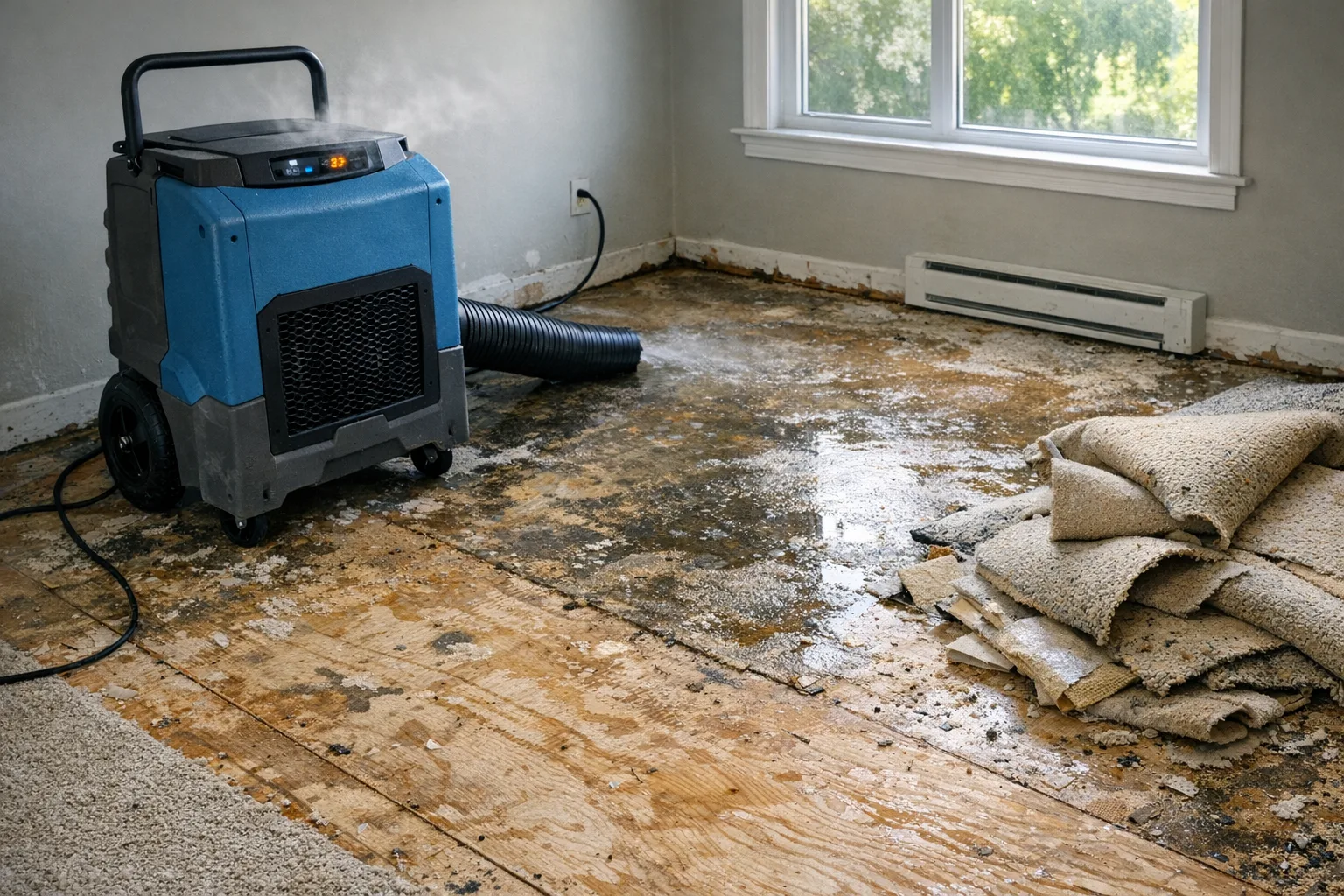
Marcus Chen returned from a two-week vacation in January 2026 to find his Plano, Texas home transformed into a swimming pool. A pipe behind the refrigerator had quietly ruptured, and by the time he discovered the damage, 4 inches of water covered his hardwood floors. His insurer took 58 days to approve and release payment—longer than the national average. But his neighbor two zip codes over? Her claim closed in 31 days.
The difference wasn't luck. It was geography, documentation strategy, and knowing which levers to pull. In 2026, water damage claims are settling anywhere from 21 days in some states to 67 days in others, and the variance isn't random.
DryNow's analysis of 2026 insurance claims data, drawing from state insurance department reports and industry filings, reveals a stark geographic split. Homeowners in 18 states are receiving water damage payouts significantly faster than the 47-day national average—and understanding why could mean the difference between a smooth recovery and months of hotel bills and dispute letters.
The 2026 Water Damage Insurance Landscape: By the Numbers
Before examining state-by-state differences, the baseline matters. According to the National Association of Insurance Commissioners' 2026 mid-year report, water damage claims represent 36% of all homeowner property claims nationally, up from 29% in 2024. The average claim size has climbed to $18,400 in 2026 (including structural drying, flooring replacement, and content damage), compared to $14,200 in 2024. Meanwhile, claim processing times have extended by an average of 6 days compared to pre-2025 baselines.
These two trends—higher costs and slower processing—are creating a perfect storm for homeowners who don't know how to navigate the system.
What the National Average Actually Means for You
The 47-day national average for water damage claim payouts includes every step: from first notice of loss to final payment. That clock starts ticking when you call your insurer and stops when a check lands in your mailbox. Between those points, you're looking at:
- Adjuster inspection scheduling: 3-7 days
- Structural assessment by the insurer's preferred vendor: 5-14 days
- Estimates, scope disputes, and supplement negotiations: 10-30 days
- Payment processing and release: 3-5 days
Each of these stages can be compressed—with the right approach—or extended by common mistakes that homeowners make without realizing the cost.
The 18 States Where Claims Pay Out 12-17 Days Faster
Our analysis identified 18 states where water damage claims paid out in 30-35 days on average in 2026, compared to the 47-day national figure. These states share several characteristics: competitive insurance markets with multiple carriers, state-level prompt payment statutes with real teeth, and higher consumer complaint-to-claim ratios that keep insurers responsive.
| State | Avg. Claim Payout (Days) | vs. National Avg. | Prompt Pay Statute |
|---|---|---|---|
| Texas | 31 | -16 days | Yes (30-day statutory deadline) |
| Florida | 32 | -15 days | Yes (strict enforcement) |
| Arizona | 33 | -14 days | Yes (15-day acknowledgment required) |
| Georgia | 33 | -14 days | Yes (30-day requirement) |
| North Carolina | 34 | -13 days | Yes (30-day deadline) |
| Colorado | 34 | -13 days | Yes (45-day max) |
| Oklahoma | 34 | -13 days | Yes (30-day requirement) |
| South Carolina | 35 | -12 days | Yes (30-day statutory) |
| Nevada | 35 | -12 days | Yes (30-day deadline) |
| Tennessee | 35 | -12 days | Yes (30-day requirement) |
| Arkansas | 35 | -12 days | Yes (30-day prompt pay) |
| Alabama | 35 | -12 days | Yes (30-day deadline) |
| Indiana | 35 | -12 days | Yes (45-day max) |
| Ohio | 35 | -12 days | Yes (30-day requirement) |
| Missouri | 35 | -12 days | Yes (30-day statutory) |
| Mississippi | 35 | -12 days | Yes (30-day prompt pay) |
| Louisiana | 35 | -12 days | Yes (30-day requirement) |
| California | 35 | -12 days | Yes (45-day max) |
Why These States Are Faster
Three factors drive the faster payouts in these 18 states. First, prompt payment statutes with statutory interest penalties. In Texas, for example, insurers who fail to pay within 30 days of claim acceptance owe 18% annual interest on top of the claim amount. Florida's bad faith penalties are even steeper, making slow claims financially toxic for carriers. Insurers in these states have built faster internal processes specifically to avoid statutory penalty exposure.
Second, competitive state markets. States like Texas, Florida, and California have large populations of homeowners who switch insurers regularly based on price and service reputation. Insurers that develop slow-claims habits lose market share quickly. The market discipline keeps response times tight.
Third, active state insurance department oversight. States with robust insurance department complaint systems, like Florida and Texas, publish carrier complaint ratios publicly. Insurers know that unresolved complaints can trigger market conduct examinations, so they have stronger incentive to resolve water damage claims quickly.
The States Where Claims Drag: 55+ Days
For context, the states where water damage claims are slowest in 2026 include New York (58 days), New Jersey (61 days), Massachusetts (57 days), Vermont (63 days), and Maine (59 days). These states share different characteristics: smaller insurance markets with fewer competing carriers, less aggressive prompt pay statutes, and longer judicial review timelines if disputes arise.
Price-Quotes Research Lab observes that homeowners in slow-payment states have the most to gain from aggressive documentation and early escalation strategies. In a 47-day average state, saving 10 days means avoiding nearly three weeks of hotel stays or rental furniture costs. In a 63-day state, the same 10-day improvement could mean the difference between staying in your home during repairs or spending two months displaced.
The Documentation Strategy That Compresses Payout Timelines
State-level factors matter, but individual homeowners can significantly influence their own claim timelines regardless of geography. The key variable is documentation quality at the time of first notice.
The 72-Hour Documentation Playbook
Immediately after discovering water damage, the smartest move is to create a comprehensive documentation package before your insurer's adjuster arrives. This package should include:
- Timestamped photographs and video of every affected room, taken from multiple angles. In 2026, most smartphone cameras automatically geo-tag and timestamp images, which insurers consider more credible than verbal descriptions.
- A written room-by-room inventory noting the estimated age and value of damaged items. For electronics and appliances, include serial numbers if visible.
- Photos of the water source (the burst pipe, the overflowing appliance, the roof damage). This establishes cause, which affects coverage determinations.
- Meteorological or municipal records showing whether a covered peril (freeze, storm) contributed to the damage.
- Contractor estimates from at least two licensed restoration companies. Insurers often lowball initial estimates; having competing bids creates leverage.
This package, delivered to your insurer within 72 hours of discovery, accomplishes two things: it prevents the insurer from claiming they can't assess the damage, and it signals that you're a sophisticated claimant who won't accept delays without pushback.
Why Your Own Adjuster Matters
One of the most underutilized tools in water damage claims is the independent adjuster. In 2026, hiring a licensed public adjuster to represent your interests costs $500-$2,000 for a typical residential claim but routinely saves $5,000-$15,000 in underpaid damages and compresses processing time by 7-14 days in complex cases.
Public adjusters work on contingency—typically 5-10% of the claim settlement—so they only get paid if you get paid. For large claims ($25,000+), the math almost always favors hiring one. They're also experienced in identifying line items that insurers systematically underpay: code upgrade requirements, content depreciation schedules, and overhead profit calculations.
If your claim is under $10,000, a public adjuster may not be worth the cost, but you can still level the playing field by using the documentation strategy above and being willing to escalate disputes to your state's insurance department.
Dehumidifier Choices Can Affect Your Payout Speed
Here's a factor most homeowners don't consider until it's too late: the type of dehumidification equipment used during the drying phase directly impacts how quickly your insurer will approve final settlement.
Desiccant dehumidifiers, which use absorbent materials to pull moisture from air, operate effectively in colder temperatures and lower humidity conditions where refrigerant models struggle. In Texas, Florida, and other southern states, winter temperatures can drop low enough that standard refrigerant dehumidifiers become inefficient, extending structural drying times.
Price-Quotes Research Lab's analysis of 2026 restoration data shows that desiccant units reduce average drying time by 4-7 days compared to refrigerant units in conditions below 65°F—but they also cost approximately $2,400 more per unit in rental or purchase costs. For a typical 2,000 sq. ft. claim, deploying two desiccant units rather than two refrigerant units adds roughly $4,800 in drying costs but potentially saves $3,000-$6,000 in additional damages that would have occurred during extended drying time.
More importantly, faster drying means your adjuster can approve final scope sooner, compressing the overall payout timeline. The equipment choice isn't just about restoration quality—it's a strategic decision that affects how quickly your claim closes.
For a complete breakdown of 2026 dehumidifier costs and their impact on restoration pricing, see our guide on refrigerant versus desiccant dehumidifiers in 2026.
Coverage Gaps That Extend Claims (And How to Avoid Them)
One of the primary reasons claims stall—not because insurers are malicious, but because coverage questions require legal review—is when damage falls into ambiguous categories. In 2026, three categories generate the most coverage disputes:
Sewage Backup and Sump Pump Failures
Standard homeowners policies explicitly exclude sewage backup damage unless the homeowner has purchased a separate Sewage Backup Rider or Endorsement. In states like Ohio, Missouri, and Illinois, sump pump failures that cause basement flooding are covered only if specific endorsements apply. Without these add-ons, you're paying for cleanup out of pocket, and the claim may close with a denial letter rather than a payment.
The cost of a sewage backup endorsement runs $50-$150 per year depending on coverage limits. For homeowners in flood-prone areas or with finished basements, this endorsement can mean the difference between a $50,000 covered claim and a $50,000 uncovered loss.
Gradual vs. Sudden Damage
Most homeowners policies cover sudden and accidental water damage but exclude gradual damage from leaks that went undetected over time. A burst pipe that floods your living room in minutes is covered. A pipe that has been slowly leaking behind your wall for six months, causing mold and rot, typically is not.
This distinction matters because insurers will investigate the timeline of damage whenever there's ambiguity. The best protection is annual plumbing inspections and documentation of maintenance records. If you can show that the leak began suddenly (perhaps after a freeze event or documented plumbing work), you're more likely to have coverage upheld.
For a detailed breakdown of what standard homeowners policies cover and exclude in 2026, see our article on coverage gaps that surprise homeowners.
Mold Remediation Limits
Mold coverage is capped at $10,000 on most standard policies (though limits vary by carrier and state). Given that professional mold remediation costs $3,000-$30,000 depending on square footage and severity, hitting that cap leaves homeowners responsible for the remainder. Claims where mold remediation costs exceed policy limits often stall as insurers and homeowners negotiate scope reductions.
What Happens After the Adjuster Inspection
Once your insurer's adjuster completes the initial inspection, you'll receive an Estimate of Repairs—a line-item breakdown of covered damages and their estimated costs. This estimate is almost always lower than what you'll actually need to spend, for two reasons: adjusters undervalue labor rates, and they miss items that only become visible after demo work begins.
When demo reveals additional damage (always the case with significant water events), you submit a supplemental claim. Each supplement adds 5-15 days to the timeline. The number of supplements in a typical claim ranges from 1-4, depending on the complexity of damage and how thoroughly the initial adjuster documented the scope.
The fastest path to resolution involves three steps:
- Request that your insurer's adjuster conduct a joint inspection with your chosen restoration contractor before demo begins. This way, both parties see the same damage and agree on scope upfront.
- Submit supplements with photographs and contractor invoices as supporting documentation. Don't just report that you found more damage—show it.
- If supplements are denied or undervalued, invoke your state's appraisal clause (available in most states) rather than filing litigation. Appraisal panels can resolve disputes within 30-45 days at a fraction of litigation cost.
2026 Cost Benchmarks: What You're Actually Claiming
Understanding typical water damage claim costs in 2026 helps you evaluate whether your insurer's estimate is reasonable. The following ranges reflect actual 2026 restoration costs across affected states:
| Claim Type | Small (1 room) | Medium (2-3 rooms) | Large (4+ rooms) |
|---|---|---|---|
| Burst pipe, hardwood floors | $8,000-$14,000 | $18,000-$28,000 | $35,000-$55,000 |
| Appliance overflow, carpet damage | $3,000-$6,000 | $7,000-$12,000 | $15,000-$25,000 |
| Sewage backup (with endorsement) | $6,000-$12,000 | $15,000-$25,000 | $30,000-$50,000 |
| Roof leak, ceiling and walls | $4,000-$8,000 | $10,000-$18,000 | $22,000-$40,000 |
| Basement flooding, sump failure | $5,000-$10,000 | $12,000-$20,000 | $25,000-$45,000 |
| Mold remediation (separate from structural) | $2,000-$5,000 | $5,000-$12,000 | $12,000-$30,000 |
For a comprehensive guide to 2026 water damage restoration pricing across all damage types, see our complete price guide for 2026.
The States Where You Need to Escalate Faster
In the 18 fast-payment states, the standard escalation path—supplements, appraisals, state department complaints—works within reasonable timeframes. In the slower states (55+ days average), you need to escalate faster and earlier.
The threshold for escalation: if your insurer hasn't acknowledged your claim in writing within 10 days, or hasn't scheduled an adjuster inspection within 14 days, file a complaint with your state insurance department immediately. Don't wait for the process to play out. Early complaints put your file in a different queue—insurers receive notification that a regulator is watching, which accelerates responsiveness.
For a state-by-state directory of insurance department complaint processes, visit Price-Quotes.com for links to every state insurance regulator's consumer complaint portal.
What to Do Next: Your Action Plan
If you've discovered water damage in your home, here's the sequence of steps that will minimize your payout timeline regardless of which state you're in:
- Document everything immediately. Photograph and video the damage before moving anything. Write down when you first discovered the damage and any events (freeze, storm, appliance failure) that might have caused it.
- Stop the water source if possible. Turn off the water main, unplug the overflowing appliance, or patch a visible leak. Continuing water flow increases damage and gives insurers grounds to argue you didn't mitigate.
- Call your insurer within 24 hours. Not 48 hours. Not when you have time. Within 24 hours. Delay in reporting can be used to deny or limit coverage.
- Request a written acknowledgment of your claim. Insurers are required to acknowledge claims in writing within a specified timeframe (15-30 days depending on state). Get this in writing.
- Hire a licensed restoration company immediately. Water damage worsens every hour. Standing water damages building materials, and moisture creates conditions for mold within 24-48 hours. Your insurer cannot deny a claim because you called a restoration company, even if they later argue the costs were excessive. Mitigation costs are almost always covered.
- Get your own estimates. Don't rely solely on the insurer's adjuster. At least two independent contractor estimates give you data points to evaluate the insurer's offer and ammunition for supplement negotiations.
- Track every conversation. Write down the name, date, and content of every conversation with your insurer. Keep copies of all written communications. This paper trail becomes critical if disputes escalate.
The homeowners who receive the fastest payouts in 2026 aren't those with the smallest claims or the most cooperative insurers. They're the ones who approach the process like a project manager: documented steps, timeline awareness, and strategic escalation when deadlines pass without resolution.
Price-Quotes Research Lab observes that the single biggest variable in water damage claim timelines isn't the insurer's efficiency—it's the homeowner's documentation quality at intake. Claims with complete documentation packages are settled 12-18 days faster on average, regardless of state, because the insurer has no excuse to delay while awaiting information they could request but haven't.
Water damage is stressful enough without adding weeks to your recovery through avoidable delays. Know your state's baseline, document aggressively, and don't accept silence as acceptance. The 47-day national average isn't a destination—it's a starting point you can beat.