Dehumidifier Costs and ROI: Preventing Water Damage vs Paying for Restoration
Dehumidifier Costs and ROI: Preventing Water Damage vs Paying for Restoration
Published 2026-04-10 • Price-Quotes Research Lab Analysis
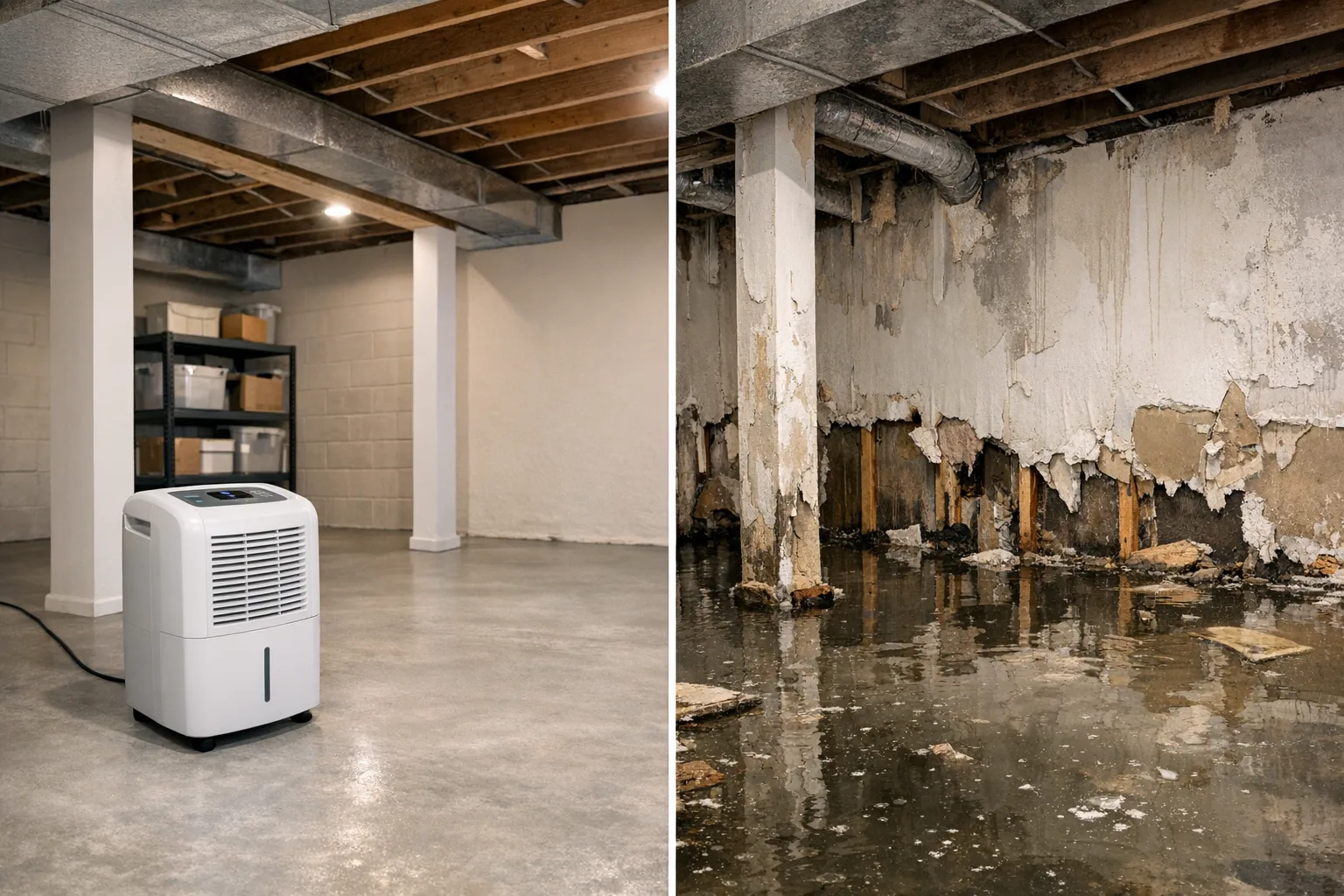
The $30,000 Wake-Up Call Hidden in Your Basement
Every year, 1.6% of American homeowners discover a brutal math problem: a burst pipe, a failed water heater, or a slow leak behind the drywall turned their basement into a $30,000 nightmare. That's roughly 1 in 63 homes filing water damage insurance claims annually, according to Flume's analysis of homeowner claims data. The cruelest part? Most of those homeowners spent less than $500 on prevention equipment that would have eliminated the entire risk. This is the math nobody teaches you until it's too late.
At Price-Quotes Research Lab, we spent months analyzing restoration invoices, prevention equipment costs, insurance claim data, and ROI projections. The numbers tell a story that every homeowner needs to hear before water finds its way through a crack in the foundation or a corroded fitting. Prevention wins. Period. But not all prevention methods are created equal, and the smart money knows exactly where to put itself.
What Water Damage Actually Costs: The Full Bill
Most homeowners imagine water damage as a mopped-up puddle and a running fan. That imagination is dangerously wrong. According to HomeGuide's 2026 cost data, water damage restoration averages between $1,500 and $14,000, with severe cases climbing past $30,000. The numbers depend entirely on how long the water sat, what materials it infiltrated, and whether mold decided to join the party.
Here is the cost breakdown that restoration companies hate explaining on the first call:
Emergency extraction and drying: $500 to $1,500 for the first 24 hours. This is just removing visible water and setting up industrial fans. If water reached your subfloor, you're already past this number.
Structural drying and dehumidification: $1,000 to $4,000 over 3 to 7 days. Professional-grade commercial dehumidifiers run continuously. Your $150 home depot unit cannot compete with 180-pint-per-day monsters that restoration companies wheel in.
Material replacement: $2,000 to $25,000 depending on square footage and what got wet. Carpet in a 1,000-square-foot basement alone costs $3,000 to $8,000 to replace. Add drywall, insulation, and subfloor damage, and you understand why the numbers explode.
Mold remediation: $1,500 to $15,000 if mold colonizes within 48 to 72 hours. Mold loves the dark, damp conditions that follow water intrusion. By the time you smell it, remediation companies already have the invoice ready.
Insurance headaches: Premium increases of 10% to 30% for 3 to 5 years after a claim. Filing a $15,000 claim might save you $15,000 today but cost you $8,000 in higher premiums over the next decade. Prevention avoids this entirely.
The math at Green Box Home Services confirms this pattern: homeowners whoinvest in prevention measures spend $300 to $2,000 annually on protection. Those who skip it face an average restoration bill that could fund 15 to 100 years of prevention costs.
The Prevention Arsenal: What $500 to $2,000 Actually Buys
Smart water monitoring and dehumidification systems represent the highest-ROI home protection investment available today. Unlike security systems that protect against break-ins that happen to 0.5% of homes annually, water monitoring systems prevent damage that affects 1.6% of homeowners every single year. That baseline risk makes the investment compelling before you even factor in regional vulnerabilities.
Smart water leak detectors: $50 to $300 per device. These battery-powered sensors sit near water heaters, under sinks, behind toilets, and in basements. When water contacts the probes, they trigger smartphone alerts and optionally shut off water supply valves. The Bluebot smart water monitor system exemplifies this category: continuous flow monitoring that detects anomalies before they become catastrophes. A $269 device that catches a failing water heater before it floods your downstairs living area has achieved infinite ROI in a single incident.
Automatic water shutoff valves: $200 to $500 installed. Pair these with leak detectors, and you get autonomous protection. The system detects a leak and automatically shuts off the main water supply. No homeowner intervention required at 2 AM. This combination prevents the scenario that generates those $30,000 insurance claims.
Whole-home dehumidifiers: $500 to $2,500 depending on capacity and installation. These aren't the cheap dorm-room units. Whole-home dehumidifiers integrate with HVAC systems, pulling 50 to 180 pints of moisture daily from your home's air. According to AlorAir's ROI analysis, basement dehumidifiers prevent the humidity conditions that accelerate structural decay, mold growth, and wood rot. In a 1,500-square-foot basement with chronic humidity, a quality dehumidifier prevents thousands in future remediation costs while making the space usable year-round.
Sump pump backup systems: $300 to $800. Primary sump pumps fail during heavy rains and power outages—the exact moment you need them most. Battery backups and water-powered backup pumps ensure your basement stays dry when municipal systems overwhelm and electrical grids go down.
Dehumidifier ROI: Running the Actual Numbers
Price-Quotes Research Lab calculated dehumidifier ROI across three homeowner profiles. The results should make you reconsider every dollar you spend on home improvement.
Scenario 1: New homeowner in a dry climate, no basement Annual dehumidification needs: Minimal. A small portable dehumidifier for bathrooms and closets costs $150 to $300. ROI calculation: Prevention of mold in one bathroom wall saves $2,000 to $5,000 in remediation. Basic prevention achieves positive ROI within the first incident prevented. Scenario 2: Family in a humid climate with a finished basement A 1,500-square-foot basement with 8-foot ceilings holds approximately 11,700 cubic feet of air. In a humid climate, that space can accumulate 10 to 20 pints of moisture daily from ground seepage, human activity, and ventilation. A quality basement dehumidifier removes 50 to 70 pints daily, maintaining humidity below 50%—the threshold where mold struggles to grow. Cost: $800 to $1,500 for installation and units like those reviewed in AlorAir's crawl space and basement dehumidifier analysis. Annual electricity cost: $150 to $300. Total annual investment: under $1,800. Protected asset: Finished basement worth $30,000 to $75,000 in flooring, drywall, furniture, and stored belongings. One prevented water event in this space pays for 15 to 50 years of dehumidifier operation. Scenario 3: Home with aging plumbing infrastructure Homes with pipes over 20 years old face dramatically elevated burst pipe risk. Corrosion, joint deterioration, and fitting fatigue create ticking time bombs. Prevention costs: $500 to $1,500 in smart monitoring. This includes leak detectors near every major appliance and water connection. Protected asset: Everything. A single burst pipe in an upstairs bathroom, left undetected for even 4 hours, can cause $15,000 to $45,000 in damage to floors, ceilings, walls, and electrical systems below. The Bluebot prevention guide emphasizes that smart monitoring catches these failures immediately, turning hours of flooding into minutes of minor cleanup. Let's put prevention and restoration in the same room and let them fight. First-year costs for a typical 2,000-square-foot home with basement: Prevention package (smart leak detectors, automatic shutoff valve, basement dehumidifier): $1,200 to $2,500 total installation. Annual operating cost: $250 to $400 for electricity and maintenance. Restoration scenario (one moderate water event, caught within 12 hours): $8,000 to $18,000 according to HomeAdvisor's 2026 cost data. This assumes quick detection. If the event occurred while the family was on vacation for a week, costs escalate to $25,000 to $45,000. Ten-year projection: Prevention costs over 10 years: $1,200 to $2,500 capital plus $2,500 to $4,000 operating expenses. Total: $3,700 to $6,500. Restoration costs over 10 years if one water event occurs: $8,000 to $45,000, plus $3,000 to $8,000 in insurance premium increases. Total: $11,000 to $53,000. This assumes only one event. Many homeowners experience multiple incidents if underlying humidity and infrastructure issues remain unaddressed. The insurance math nobody discusses: Your deductible probably isn't $500. If it's $1,000 or $2,500, you're already absorbing the first tier of restoration costs out of pocket before insurance kicks in. Prevention eliminates the claim entirely, preserving your premium and your deductible for legitimate catastrophic events. As Flume's financial analysis notes, filing water damage claims increases premiums by an average of 15% to 25% depending on claim size and carrier. Over 10 years, that premium increase often exceeds the cost of prevention. Prevention isn't magic. Some water events will still occur despite the best monitoring. The difference lies in scope and cost. Without monitoring, a leak becomes a flood. With monitoring, that same leak becomes a $500 plumbing repair and minor drying. According to Prime Restorers' equipment cost analysis, professional water damage restoration typically involves: Inspection and moisture mapping: Technicians use thermal imaging cameras and moisture meters to identify water saturation in walls, floors, and structural elements that aren't visible to the naked eye. This step alone costs $300 to $800 if performed independently, but restoration companies include it in their service packages. Industrial extraction: Truck-mounted extraction units remove thousands of gallons daily. Rental units from home improvement stores cannot match this capacity. Professional extraction for a moderate basement flood runs $1,500 to $4,000. Commercial dehumidification: Restoration companies deploy desiccant and refrigerant dehumidifiers rated at 100 to 300 pints per day. The CalculateProject cost guide for 2025 indicates this phase alone costs $800 to $3,000 depending on duration and equipment count. Antimicrobial treatment and mold prevention: $500 to $2,500. Chemical treatments prevent the biological growth that turns a manageable water event into a health hazard and a remediation nightmare. Even with professional restoration, you're looking at $5,000 to $20,000 for moderate events. The prevention investment that cost $1,500 would have avoided 90% of that expense and virtually all the stress and disruption. Not all dehumidifiers deliver meaningful ROI. Consumer-grade units from big-box stores address comfort, not protection. Here's what separates equipment that generates positive ROI from equipment that generates monthly electricity bills: Pint capacity rating: Manufacturers rate dehumidifier capacity under controlled laboratory conditions (80°F, 60% relative humidity). Real-world performance drops 20% to 40% in basements, which often run 65°F to 72°F with 70% to 85% humidity. A 50-pint rated unit might deliver 30 pints in your basement. AlorAir's ROI guide recommends sizing up—choose a unit rated 1.5 to 2 times your calculated moisture load. Water removal vs. energy consumption: Energy Star certified units remove more water per watt-hour. Over a basement dehumidifier's 10-year lifespan, the energy savings from an Energy Star unit typically offset 30% to 50% of the purchase price premium. Continuous drainage options: Units requiring manual tank emptying fail. Nobody dumps tanks daily for years. Pump-equipped units that drain into utility sinks or through basement floors provide true set-it-and-forget-it protection. This feature separates prevention equipment from consumer convenience devices. Built-in humidistats: Units that run continuously waste energy and wear components faster than necessary. Humidistat-controlled units maintain target humidity (45% to 50%) automatically, running only when needed. This extends unit lifespan and reduces electricity costs by 40% to 60% compared to continuous operation. Corrosion-resistant components: Basement air contains more particulates and potentially more corrosive elements than main-floor air. Units with coated coils and sealed electronics outlast consumer models by 5 to 10 years in crawl spaces and basements. National averages obscure critical regional variations. Your geography determines whether your prevention investment should be conservative or aggressive. High-risk zones: Coastal states, the Gulf Coast, the Southeast, and the Pacific Northwest experience humidity levels that make dehumidification mandatory, not optional. Annual precipitation above 40 inches correlates strongly with basement water events. In these regions, prevention measures achieve ROI within months, not years. Freeze-thaw regions: Northern states with freeze-thaw cycles face elevated pipe burst risk. Water expands 9% when frozen. Pipes freeze, crack, and then flood when thawing occurs. Smart monitoring with automatic shutoff valves become essential rather than optional in these climates. Aging housing stock: Municipal water systems across the United States average 25 to 100 years old. Galvanized steel pipes common in homes built before 1980 corrode from the inside, reducing flow and increasing failure risk. If your home predates 1985 and still has original plumbing, prevention investment should assume accelerated failure rates. Dehumidifiers and smart monitors require maintenance to maintain their protective function. Budget this time and money into your ROI calculations: Dehumidifier maintenance (annual): $50 to $150. Filter replacement ($20 to $50), coil cleaning ($0 to $30 with DIY approach), professional inspection ($50 to $100). This maintenance extends unit lifespan from 5 years to 10+ years in many cases. Smart monitor maintenance (annual): $0 to $30. Battery replacement in wireless sensors, firmware updates, WiFi connection checks. Units like the Bluebot system provide app-based diagnostics that alert you to connectivity issues before they become coverage gaps. Shutoff valve inspection (semi-annual): $0 to $50. Exercise the valve quarterly to ensure it moves freely. A seized valve that fails to shut off during an emergency defeats the entire purpose of the investment. Total annual maintenance cost for a comprehensive prevention system: $100 to $250. This cost should appear in any honest ROI calculation, and even with this inclusion, prevention wins decisively against restoration costs. Humans are terrible at low-probability, high-consequence risk assessment. We install smoke detectors because fires feel immediate and dramatic. We procrastinate on water monitoring because leaks feel like future problems for future us. The problem is that water damage doesn't send calendar invitations. According to Flume's analysis of water damage timing, most catastrophic water events occur during three specific windows: winter freeze events (January to February), summer thunderstorm season (June to August), and extended vacation periods when homeowners are away for 5+ days. These are predictable risk windows that demand protection before they arrive. The best time to install prevention equipment is when you close on your home. The second-best time is today. Waiting until after your first near-miss costs you the deductible, the stress, and the knowledge that the next event is coming. Few homeowners realize that home water monitoring and prevention equipment may qualify for property tax benefits in certain jurisdictions. Some states offer sales tax exemptions on dehumidifiers and water monitoring equipment classified as essential home maintenance tools. Check your state and municipality before purchasing. Insurance discounts remain rare but exist in limited markets. Some carriers offer 5% to 10% premium reductions for documented water monitoring systems. Bluebot notes that certain insurers provide premium credits for documented prevention systems, particularly in flood-prone regions. Call your agent before purchasing to understand what documentation they require. Price-Quotes Research Lab's analysis produces a clear conclusion: every dollar spent on water damage prevention returns $10 to $100 over a 10-year horizon when compared against a single moderate water event. This return ratio exceeds virtually every other home improvement investment available to homeowners. The specific investment depends on your home's vulnerabilities, your climate, and your risk tolerance. But the framework is universal: Minimum viable protection ($150 to $300): Battery-powered leak detectors near water heater, washing machine, and all bathrooms. These provide early warning that reduces event severity by 50% to 80%. Recommended protection ($500 to $1,000): Add automatic water shutoff valves and a basement/crawlspace dehumidifier with continuous drainage. This combination catches events automatically and prevents the humidity conditions that cause secondary damage. Comprehensive protection ($1,500 to $3,000): Full smart water monitoring with flow analysis, automatic shutoffs, whole-home dehumidification integration, and sump pump backup. This investment approaches the cost of a single restoration but delivers permanent protection rather than one-time remediation. The math is not complicated. The decision is not difficult. The only barrier is the human tendency to believe that bad things happen to other people. Water damage will happen to 1.6% of homeowners this year. Without prevention, that 1.6% will pay an average of $8,000 to $30,000. With prevention, they will pay $500 to $2,000 and a minor plumbing bill. At Price-Quotes Research Lab, we study these numbers so you don't have to learn them the expensive way. Your home's equity deserves protection. Your family's peace of mind deserves protection. The equipment exists, the costs are known, and the ROI is proven. The only question is whether you'll act before the water finds its way in.Restoration vs. Prevention: The Head-to-Head Comparison
When Restoration Becomes Necessary: The Honest Assessment
The Dehumidifier Decision: Which Unit Actually Protects Your Investment
Regional Risk Factors That Demand Aggressive Prevention
The Maintenance Reality: Prevention Isn't Set-and-Forget
The Timeline Problem: Why Homeowners Wait Too Long
Tax Implications and Insurance Considerations
The Verdict: Prevention Delivers 10:1 to 100:1 ROI
Key Questions
How much does water damage restoration cost in 2026?
Is a whole-house dehumidifier worth the investment?
What is the average water damage insurance claim amount?
How much does smart water monitoring cost?
What percentage of homes experience water damage?
How do I calculate ROI for dehumidifier purchase?
What's the difference between professional restoration and DIY cleanup?
Related Services