Water Damage Restoration Costs in 2026: What Flood Cleanup, Mold Remediation, and Basement Waterproofing Actually Cost
Water Damage Restoration Costs in 2026: What Flood Cleanup, Mold Remediation, and Basement Waterproofing Actually Cost
Published 2026-05-18 • Price-Quotes Research Lab Analysis
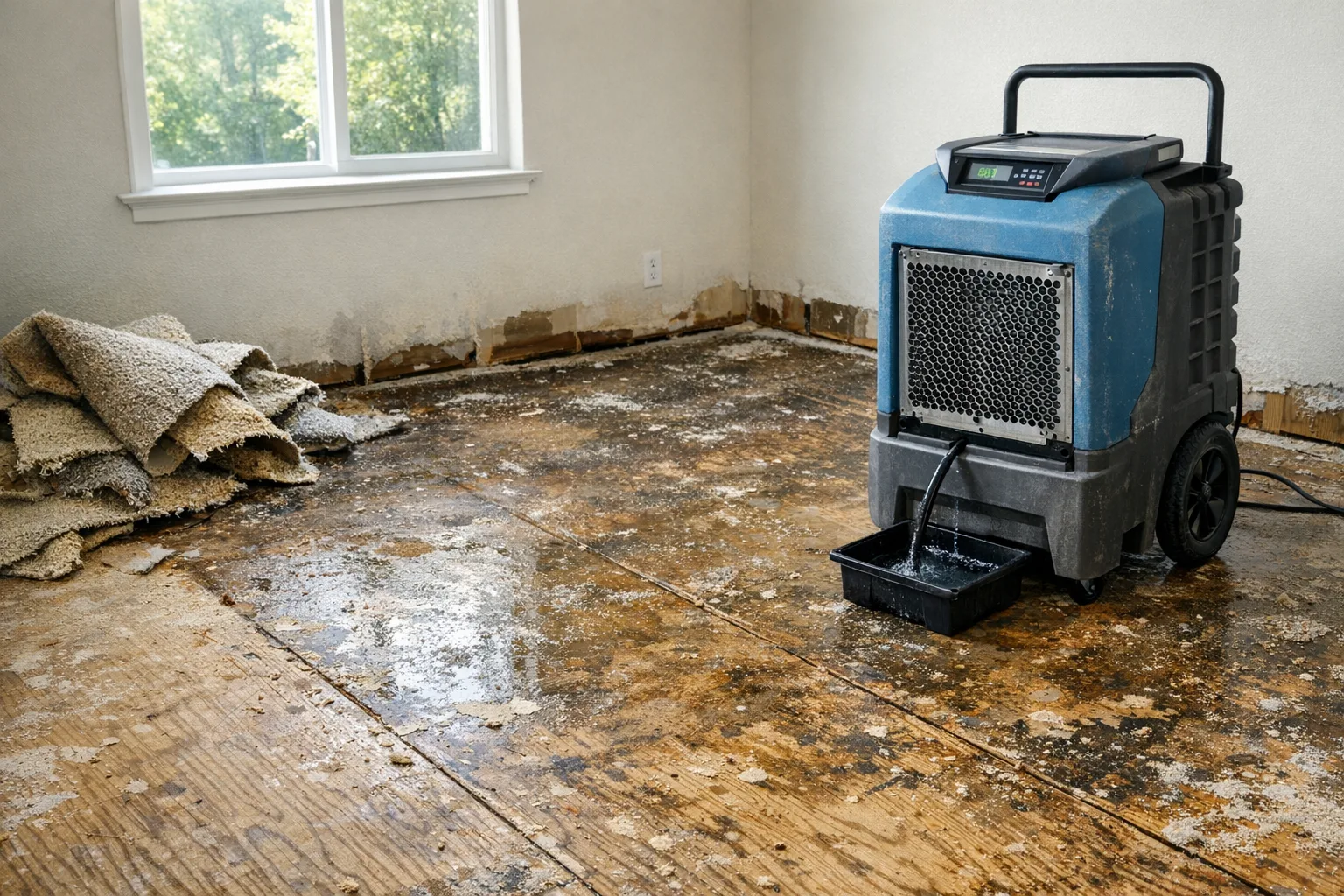
The $9,000 Surprise: Why Most Homeowners Don't Know What Water Damage Actually Costs Until It's Too Late
Last spring, Marcus and Elena Reyes returned from a weekend trip to find their finished basement under two inches of water. A washing machine supply line had failed while they were gone. They assumed their homeowner's insurance would cover most of it—and it did—but when the restoration company handed them an itemized invoice, they noticed something troubling: the line items didn't match what they'd found online. The company's estimate was $8,200. Online sources said $2,000–$4,000. Who was right?
The answer, as with most things in the water damage industry, is complicated. Costs vary wildly based on the type of damage, the size of the affected area, the category of water involved, and whether mold has begun to grow. But here's what the Reyes family learned after three days of research: most published cost ranges are either outdated, too broad, or based on averages that don't reflect what most homeowners actually pay.
That's the gap DryNow exists to fill. This article presents current 2026 pricing data for the four most common water damage services—water damage restoration, flood cleanup, mold remediation, and basement waterproofing—along with the context you need to evaluate estimates, avoid overcharges, and make confident decisions when water invades your home.
Understanding the 2026 Water Damage Cost Landscape
Before diving into specific numbers, let's establish how these costs are measured. The data in this article uses the p50 (median) as the primary benchmark—the point where half of homeowners pay more and half pay less. We also provide the p10/p90 range, which captures the middle 80% of costs. This approach gives you a realistic expectation rather than a cherry-picked average that can be skewed by extreme outliers.
Price-Quotes Research Lab observes that water damage costs have remained relatively stable from 2025 into 2026, with minor variations across service categories. However, the range between budget-friendly and premium services has widened, making informed consumer choices more important than ever.
All pricing data in this article was observed in May 2026 and reflects national averages. Your actual costs will depend on your location, the severity of damage, and whether you engage a national chain or a local contractor. For a personalized estimate, we recommend comparing at least three bids from licensed professionals.
Water Damage Restoration: The Baseline Cost
Water damage restoration is the umbrella service that covers drying, cleaning, and restoring areas affected by water intrusion. It typically includes water extraction, structural drying with industrial equipment, sanitization, and repairs to damaged materials.
According to the HomeAdvisor Water Damage Repair Cost Guide (observed 2026-05-18), the median cost for water damage restoration is $4,500. The middle 80% of projects fall between $4,500 and $6,500.
That $2,000 range represents a meaningful difference in scope. A $4,500 restoration might involve a single water heater failure affecting one room. A $6,500 restoration could mean a whole-house event with multiple rooms requiring drying equipment for a week or longer.
What Affects Water Damage Restoration Costs
Three factors drive costs within this range:
- Water category: Clean water (from a broken pipe) is less expensive to remediate than gray water (from appliances) or black water (sewage or flooding). Category 3 water requires more extensive safety protocols and disposal procedures.
- Affected materials: Hardwood floors, drywall, and insulation absorb water differently than tile or concrete. Porous materials often need removal and replacement rather than drying in place.
- Drying time: Industrial dehumidifiers and air movers run 24–7 for several days. Longer drying times mean higher equipment rental costs.
When Restoration Costs Climb Higher
If water damage is not addressed within 24–48 hours, mold growth can begin, pushing costs into mold remediation territory. Similarly, if structural elements like subflooring or wall studs are compromised, repair costs add on top of restoration.
Price-Quotes Research Lab observes that homeowners who delay calling a restoration company by even 48 hours frequently see their total project cost increase by 40–60% compared to same-day response. Speed matters.
Flood Cleanup: What It Really Costs in 2026
Flood cleanup differs from standard water damage restoration in one critical way: the water source is typically external. Whether from a severe storm, a sump pump failure, or groundwater intrusion, flood water is almost always Category 2 or Category 3, requiring more intensive handling.
The median cost for flood cleanup in 2026 is $4,500, with the middle 80% of projects ranging from $4,500 to $4,700. This narrower range compared to general water damage restoration reflects the more standardized nature of flood events—there's typically less ambiguity about what needs to be done.
However, don't mistake the narrow range for simplicity. The HomeAdvisor Water Damage Repair Cost Guide (observed 2023-10-30) notes that flood cleanup costs can spike dramatically if the flooding involves contaminated water or if the structure was submerged for an extended period.
Flood Cleanup vs. Water Damage Restoration: The Key Differences
| Factor | Flood Cleanup | Water Damage Restoration |
|---|---|---|
| Typical water source | External (storm, groundwater) | Internal (pipes, appliances) |
| Water category | Usually Category 2 or 3 | Can be Category 1, 2, or 3 |
| Median cost (2026) | $4,500 | $4,500 |
| 80% range | $4,500–$4,700 | $4,500–$6,500 |
| Typical timeline | 3–7 days | 2–10 days |
Notice that while medians match, flood cleanup's tighter range means fewer extreme outliers. If your flood cleanup estimate comes in at $4,700 or below, you're likely within the normal range. If it climbs to $7,000 or $8,000, ask for a detailed line-item breakdown.
Mold Remediation: The Hidden Cost Many Homeowners Overlook
Mold remediation is often the most misunderstood water damage service. Many homeowners assume it's optional or cosmetic. It's neither. The CDC recommends professional mold remediation for any growth covering more than 10 square feet, and most homeowner's policies cover mold removal when it results from a covered water damage event.
The median cost for mold remediation in 2026 is $2,500. However, the range is wider here: the middle 80% of projects fall between $2,500 and $3,500. This $1,000 spread reflects significant variation in remediation approaches.
What's Included in Mold Remediation
Professional mold remediation typically includes:
- Assessment and testing: A certified inspector identifies the type of mold and the extent of colonization.
- Containment: Technicians seal off affected areas to prevent spore dispersal to clean areas of the home.
- Removal: Contaminated materials (drywall, insulation, carpet padding) are removed and disposed of properly.
- Treatment: Antimicrobial solutions are applied to kill remaining spores and inhibit future growth.
- HEPA filtration: Air scrubbers capture airborne spores throughout the process.
The HomeAdvisor Water Damage Repair Cost Guide (observed 2023-02-15) notes that DIY mold removal attempts frequently fail to address the root cause and can actually spread contamination. Professional remediation is priced higher precisely because it includes containment and source elimination.
When Mold Remediation Costs Exceed the Range
Projects exceeding $3,500 typically involve one or more of these factors:
- Extensive coverage: Mold covering walls, floors, and HVAC systems requires more labor and materials.
- Structural mold: Mold growing within wall cavities or beneath flooring requires demolition and reconstruction.
- Toxic mold species: Stachybotrys (black mold) requires specialized handling and safety protocols.
- Recurring mold: If previous remediation failed due to incomplete drying, re-treatment costs add up.
Basement Waterproofing: The Long-Term Investment
Basement waterproofing stands apart from the other services in this article because it's primarily preventive rather than reactive. While flood cleanup and water damage restoration respond to events that have already occurred, basement waterproofing aims to prevent future water intrusion.
The median cost for basement waterproofing in 2026 is $7,500, with the middle 80% of projects ranging from $7,500 to $8,050. This is a significant investment—often five to ten times the cost of a single water damage restoration—but it's also one that typically lasts 10–20 years and can reduce ongoing moisture-related expenses.
Price-Quotes Research Lab observes that homeowners who waterproof their basements after experiencing water damage often pay less in the long run than those who repeatedly pay for restoration services. A single major flood cleanup can cost $4,500; two or three such events over a decade easily exceed the cost of waterproofing.
What Basement Waterproofing Includes
Professional basement waterproofing typically involves one or more of these approaches:
- Interior sealants: Waterproof coatings applied to basement walls to block moisture penetration.
- Exterior waterproofing: Membrane or coating applied to the exterior foundation walls, often combined with drainage systems.
- Sump pump installation: A pump system that collects groundwater and redirects it away from the foundation.
- French drain installation: Gravel and piping that channel groundwater away from the foundation.
- Window well covers and drains: Sealing and draining window wells to prevent window-well flooding.
The HomeAdvisor Water Damage Repair Cost Guide (observed 2021-02-02) notes that exterior waterproofing and drainage systems are generally more effective than interior sealants alone, but also more expensive. The right approach depends on your soil type, local water table, and the specific vulnerabilities of your foundation.
Cost Comparison: All Four Services Side by Side
The following table summarizes the 2026 pricing data for all four water damage services covered in this article:
| Service | Median Cost (p50) | 80% Range (p10–p90) | Typical Timeline | Primary Trigger |
|---|---|---|---|---|
| Water Damage Restoration | $4,500 | $4,500–$6,500 | 2–10 days | Pipe leak, appliance failure, roof leak |
| Flood Cleanup | $4,500 | $4,500–$4,700 | 3–7 days | Storm flooding, sump pump failure, groundwater |
| Mold Remediation | $2,500 | $2,500–$3,500 | 3–5 days | Delayed water damage response, chronic moisture |
| Basement Waterproofing | $7,500 | $7,500–$8,050 | 1–3 weeks | Preventive measure, post-damage prevention |
Notice that mold remediation has the lowest median cost but can easily combine with other services. If water damage is not addressed promptly, mold growth typically adds $2,500–$3,500 to the total project cost.
How to Avoid Getting Overcharged
The water damage industry has a well-documented problem with estimate inflation. Unlike roofing or HVAC, where costs are relatively standardized, water damage estimates often include line items that are difficult for homeowners to verify. Here's how to protect yourself:
Get Three Written Estimates
Never accept the first estimate you receive. The HomeAdvisor Water Damage Repair Cost Guide (observed 2021-07-23) recommends obtaining at least three itemized estimates before signing any contract. Look for estimates that include:
- Square footage of affected areas
- Number and type of drying equipment
- Materials to be removed and replaced
- Labor hours and hourly rates
- Projected timeline
Verify Equipment Usage
Some disreputable contractors charge for equipment that isn't actually deployed. Ask to see the equipment on-site and request daily logs showing usage. Legitimate companies will have no problem providing this documentation.
Understand Water Categories
If you're told that Category 3 water was involved but the cleanup looks minimal, question the estimate. Category 3 requires specific safety protocols, disposal procedures, and sanitization steps that should be reflected in the line items.
Check for Hidden Add-Ons
Common overcharge tactics include:
- Charging for unnecessary testing: Visual inspection is often sufficient for minor mold; air testing may be unnecessary for straightforward cases.
- Inflating drying time: Professional drying should be complete within 3–7 days for most residential projects. Charges beyond this require explanation.
- Marking up materials: Materials costs should be competitive with retail. Excessive markups indicate profit-padding.
Does Insurance Cover Water Damage Costs?
This is where many homeowners get confused. Standard homeowner's insurance policies typically cover:
- Sudden and accidental water damage: A burst pipe that damages drywall and flooring is usually covered.
- Storm-related flooding: If wind damages your roof and rain enters, the resulting water damage is typically covered.
Standard policies typically do NOT cover:
- Gradual water damage: A slow leak that causes rot over months is often denied as "failure to maintain."
- Groundwater flooding: Water that enters through the foundation from rising groundwater is usually excluded.
- Flood damage: Separate flood insurance (through FEMA's NFIP program) is required for this.
Price-Quotes Research Lab observes that the average homeowner's claim for water damage restoration runs $4,000–$6,000, but denied claims are common when the cause is ambiguous or when maintenance was neglected. Document everything with photos and keep maintenance records for your plumbing and appliances.
Historical Context: How 2026 Costs Compare to Previous Years
Looking at historical data from the HomeAdvisor Water Damage Repair Cost Guide (observed 2014-08-04), water damage restoration costs have increased significantly over the past decade. In 2014, median costs were approximately $2,500–$3,000 for similar services. By 2026, that median has risen to $4,500.
This increase reflects several factors:
- Labor costs: Skilled water damage technicians are in high demand and command higher wages than a decade ago.
- Equipment sophistication: Modern drying equipment is more efficient but also more expensive to purchase and maintain.
- Regulatory requirements: Stricter guidelines for mold remediation and contaminated water disposal have increased compliance costs.
- Material costs: Building materials, from drywall to flooring, have increased substantially since 2020.
For homeowners who experienced water damage in 2014 and are facing it again in 2026, the cost difference can be jarring. Budget accordingly.
What to Do Next: Your Action Plan
If you're facing water damage right now, here's your step-by-step guide:
- Stop the water source if possible. Turn off the main water valve if a pipe has burst. If flooding is from an external source, evacuate if necessary.
- Document everything. Take photos and videos before anything is moved or dried. This documentation is critical for insurance claims.
- Call your insurance company. Report the damage and ask about coverage before hiring a restoration company. Get a claim number if applicable.
- Get three estimates. Use a service like price-quotes.com to compare quotes from licensed contractors in your area.
- Verify credentials. Ensure each contractor is licensed, insured, and certified by the IICRC (Institute of Inspection Cleaning and Restoration Certification).
- Read the contract carefully. Ensure it includes a detailed scope of work, timeline, and payment schedule. Never pay the full amount upfront.
- Monitor the work. Request daily updates and photos. Ask questions if something doesn't match the estimate.
For Preventive Action
If you've experienced water damage before or live in an area prone to flooding, consider:
- Installing a water leak detector with automatic shutoff
- Maintaining your sump pump and testing it quarterly
- Cleaning gutters and ensuring proper grading away from the foundation
- Scheduling a basement waterproofing consultation if you've had recurring issues
Price-Quotes Research Lab observes that homeowners who invest $500–$1,000 in preventive measures often avoid $4,500+ restoration costs. The math favors preparation.
Bottom Line: What You Should Actually Expect to Pay in 2026
Here's the summary of what water damage will actually cost you in 2026:
- Water damage restoration: Median $4,500, typically $4,500–$6,500 for the middle 80% of projects.
- Flood cleanup: Median $4,500, typically $4,500–$4,700 for the middle 80% of projects.
- Mold remediation: Median $2,500, typically $2,500–$3,500 for the middle 80% of projects.
- Basement waterproofing: Median $7,500, typically $7,500–$8,050 for the middle 80% of projects.
If someone quotes you prices significantly outside these ranges, ask for a detailed breakdown. If they can't explain the difference, get another estimate.
Water damage is stressful enough without the added burden of financial surprises. Armed with these numbers, you can approach the process with confidence, ask the right questions, and ensure you're paying for what you actually need.