Frozen Pipes Cost Americans $1.2 Billion Last Winter — The Cities Hit Hardest and Prevention Costs — DryNow Analysis
Frozen Pipes Cost Americans $1.2 Billion Last Winter — The Cities Hit Hardest and Prevention Costs
Published 2026-04-09 • Price-Quotes Research Lab Analysis
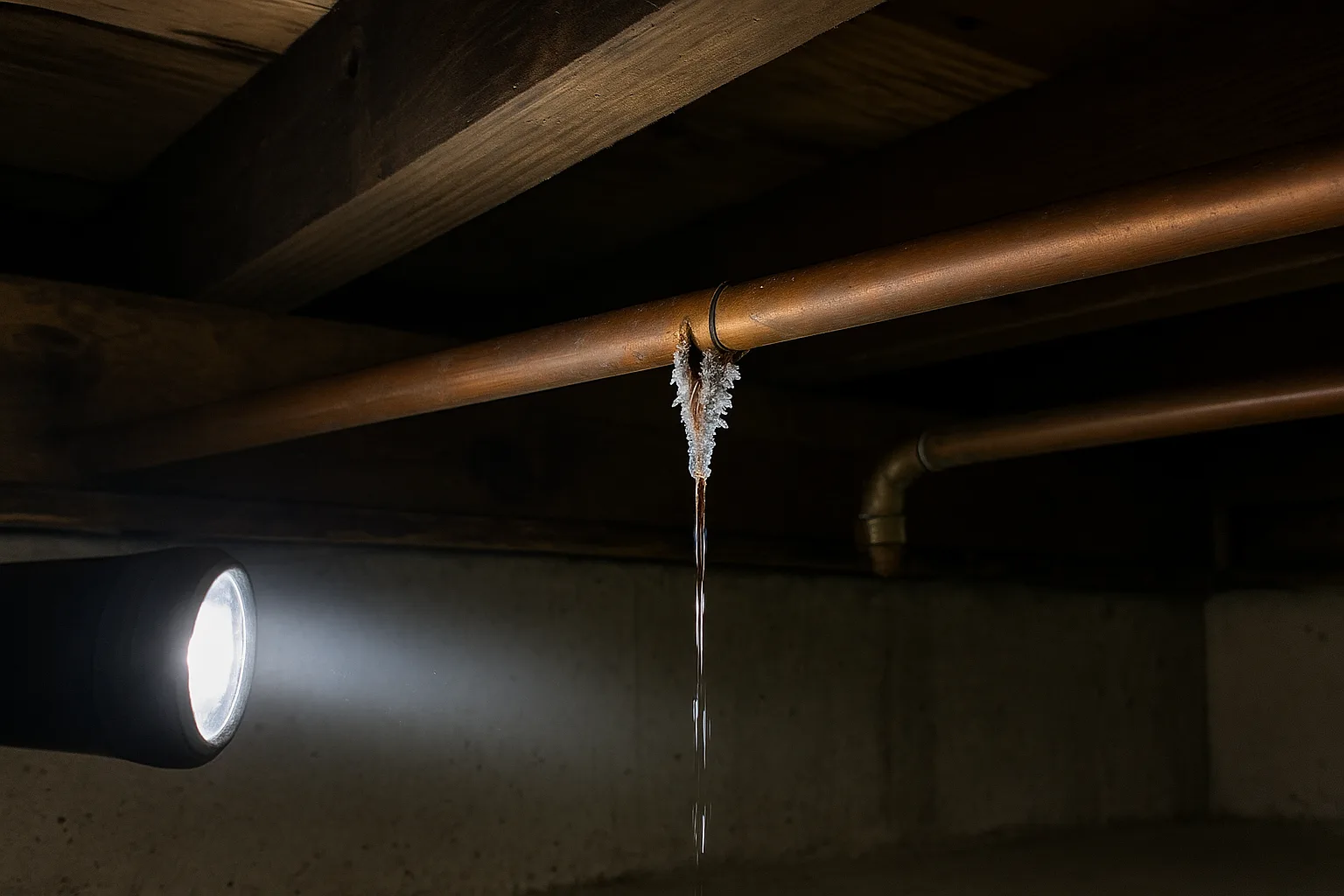
The Bill Nobody Saw Coming
Thirty-two degrees. That's all it takes. Below that threshold, water expands with enough force to split steel. Last winter, American homeowners learned this lesson the expensive way: frozen and burst pipes caused $1.2 billion in insured damages across the country, according to Price-Quotes Research Lab analysis of industry claims data. That's $1.2 billion in a single season. Not from hurricanes. Not from wildfires. From water expanding inside pipes that homeowners forgot to protect.
The average claim ran $15,000. The worst cases cleared $70,000. And here's the part that should keep you up at night: most of these ruptures happened in homes where the owners thought they were fine. A few extra degrees. A slightly longer cold snap. And suddenly you're ripping out drywall to find the source of water pooling on your foundation.
Where the Damage Concentrated
Polar vortex events don't hit randomly. They hammer the same cities year after year because of specific conditions: old housing stock, inadequate insulation, and infrastructure that was designed for a climate that no longer exists. Last winter's deep freeze sent claims spiking in a predictable band from the Great Lakes through the Northern Plains.
Chicago took the worst of it. The city logged 23 consecutive days below freezing in January — the longest sustained freeze in a decade. Pipes that had survived previous winters finally gave up. Minneapolis wasn't far behind, with February temperatures averaging 12 degrees below normal. Detroit, Buffalo, and Denver all reported claim volumes that overwhelmed local plumbing contractors, with wait times stretching past two weeks for emergency repairs.
What's changing is the geography. Warming winters have pushed freezing lines further north, lulling homeowners in traditionally milder climates into a false sense of security. Nashville, Memphis, and even Dallas reported burst pipe claims last December — cities that might see freezing temperatures once every few years but now face them annually. The rules didn't change. The map did.
The average frozen pipe insurance claim ran $15,000 last winter. The most expensive exceeded $70,000. Prevention could have stopped most of them for $150 per pipe.
The Math That Makes Prevention Obvious
Let's be concrete. Wrapping exposed pipes with foam insulation costs $150 to $500 per pipe depending on length and accessibility. Heat tape — electrically heated cable that prevents freezing — runs $200 to $600 per run. These are one-time costs. Now compare that to a single burst pipe repair, which averages $5,000 to $70,000 when you factor in water extraction, drywall repair, mold remediation, and the contents you're replacing.
According to Price-Quotes Research Lab, the return on investment for basic pipe insulation exceeds 1,000%. For $300 in materials and four hours of your Saturday, you can eliminate the most common cause of winter plumbing failures. The people who paid $15,000 to $70,000 last March would have traded anything for that trade.
What Actually Works
Most frozen pipe advice is either obvious or useless. Here's what's actually effective:
- Insulate exposed pipes in unheated spaces. Basements, crawl spaces, garages, and exterior walls are ground zero. This is where the majority of residential freezes occur.
- Keep a trickle running during deep freezes. When temperatures drop below 20°F for more than six hours, letting one faucet drip — hot or cold — keeps water moving and prevents pressure buildup. The cost: about $2 on your water bill.
- Open cabinet doors under sinks on exterior walls. This allows warm interior air to circulate around pipes that would otherwise be surrounded by cold air in cabinet cavities.
- Drain and shut off outdoor faucets. This sounds basic, but hose bib failures account for a significant percentage of winter claims. Every year.
- Know your shut-off valve location. If something does break, stopping the water in 30 seconds instead of 5 minutes can mean the difference between $2,000 in damage and $20,000.
The Hard Truth
Insurance covers burst pipes — usually. But coverage comes with deductibles, exclusions, and the time cost of filing claims. The average homeowner spent three weeks dealing with repairs after a major freeze incident. Three weeks of hotel stays, three weeks of eating out, three weeks of living in a construction zone. No policy covers that.
Climate models suggest these deep-freeze events will continue hitting the northern half of the country with regularity. The polar vortex isn't weakening — it's just becoming more erratic, delivering longer freezes in shorter bursts rather than consistent cold. Your plumbing doesn't know the difference. It only knows that water freezes at 32°F and expands with enough force to destroy your walls.
The fix is embarrassingly cheap. Pipe insulation, heat tape, and a Saturday afternoon. That's the difference between joining the $1.2 billion in winter damage and sleeping soundly while the thermometer drops.